by Johnny Cycles, May 1st, 2026
Be sure to subscribe to my YouTube channel to support my content and see the videos before they make it to this site!
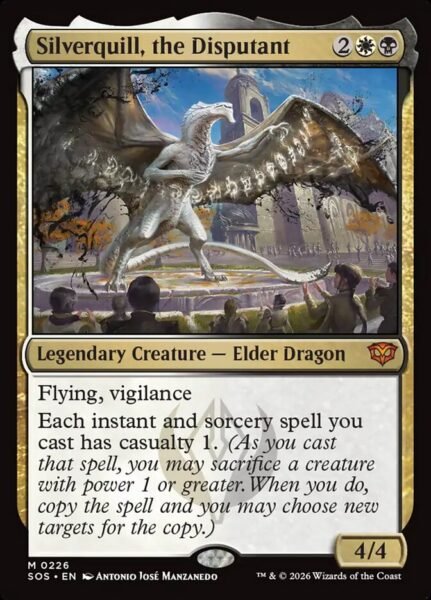
A new set means a new budget Commander deck! I’m doubly excited about this set’s commander because it encapsulates two of my favorite things in Magic: Dragons and tokens. I chose Silverquill, the Disputant for another reason, though. I don’t have an Orzhov deck that I’m happy with. I built a Spirit deck a long time ago with Obzedat, Ghost Council at the helm, but I was never satisfied with it. The deck feels too much like a good-stuff Orzhov deck, rather than focused on a unified theme.
Rather than rebuild that deck, I’m excited to try out a new direction with a new commander. Silverquill, the Disputant presents us with seemingly conflicting strategies. We want lots of instants and sorceries to copy, but we need creatures to do this. And while just about every Commander deck plays these three card types, we’d rather not sacrifice a bunch of powerful creatures to copy even the most powerful spell.
But what if we could use instants and sorceries to make creatures?
Decklist – Silverquill, the Disputant
| Silverquill, the Disputant |
Creatures (16) – Total Price: $29.10
| Doomed Traveler | .20 cents |
| Hunted Witness | .25 cents |
| Jadar, Ghoulcaller of Nephalia | $3.81 |
| Tithe Taker | .37 cents |
| Adeline, Resplendent Cathar | $2.85 |
| Kambal, Profiteering Mayor | $5.30 |
| Lord Skitter, Sewer King | $6.40 |
| Monastery Mentor | .54 cents |
| Sanguine Evangelist | .38 cents |
| Suki, Courageous Rescuer | .33 cents |
| Emeria Angel | .40 cents |
| Teysa Karlov | $1.71 |
| Warren Warleader | $1.79 |
| Eirdu, Carrier of Dawn | $5.10 |
| Liesa, Forgotten Archangel | $1.07 |
| Thalisse, Reverent Medium | .31 cents |
| Harmonious Archon | .40 cents |
Artifacts (7) – Total Price: $13.12
| Arcane Signet | .52 cents |
| Horn of Valhalla | .63 cents |
| Orzhov Signet | .38 cents |
| Talisman of Hierarchy | .75 cents |
| Bontu’s Monument | $4.13 |
| Oketra’s Monument | $4.39 |
| Phoenix Fleet Airship | $2.32 |
Enchantments (3) – Total Price: $3.30
| Intangible Virtue | .25 cents |
| Skrelv’s Hive | $1.92 |
| Divine Visitation | $1.13 |
Instants (18) – Total Price: $11.70
| Cling to Dust | .34 cents |
| Gods Willing | .25 cents |
| Path to Exile | $1.11 |
| Restoration Magic | $1.73 |
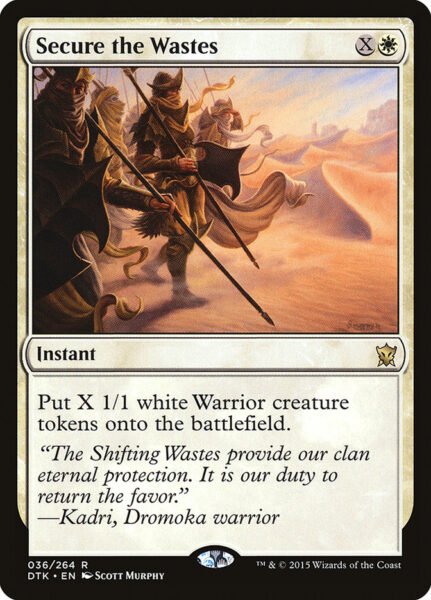
| Secure the Wastes | $1.50 |
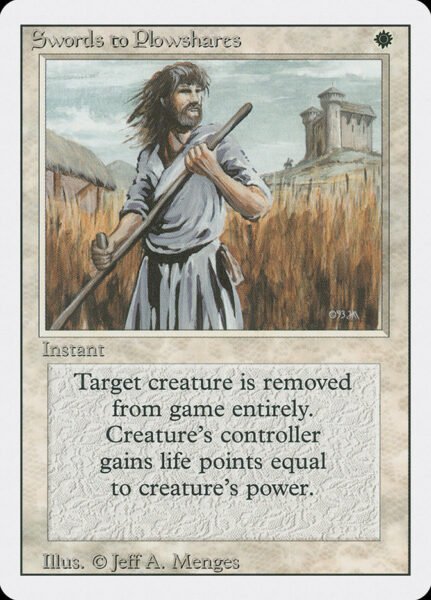
| Swords to Plowshares | $1.37 |
| Undying Malice | .48 cents |
| Village Rites | .39 cents |
| Altar’s Reap | .20 cents |
| Costly Plunder | .25 cents |
| Despark | .40 cents |
| Rabid Attack | .40 cents |
| Raise the Alarm | .20 cents |
| Vanishing Verse | .35 cents |
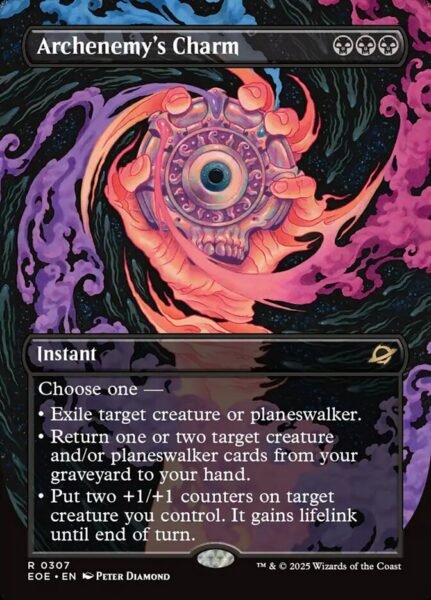
| Archenemy’s Charm | $1.50 |
| Midnight Haunting | .24 cents |
| Rootborn Defenses | .27 cents |
| Moogles’ Valor | .72 cents |
Sorceries (17) – Total Price: $16.61
| Requisition Raid | .45 cents |
| Damn | $1.63 |
| Gather the Townsfolk | .20 cents |
| Night’s Whisper | .41 cents |
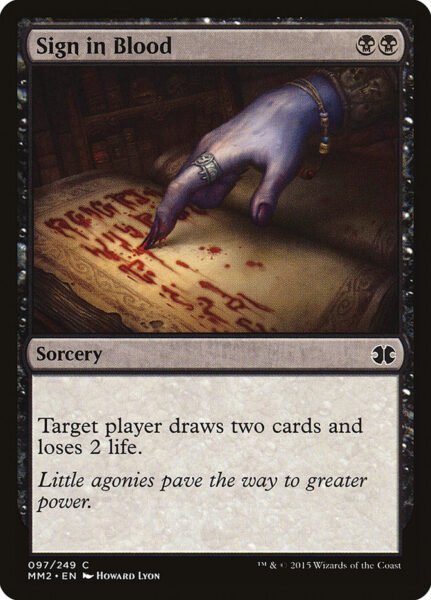
| Sign in Blood | .40 cents |
| United Front | $2.81 |
| White Sun’s Twilight | $2.04 |
| Entreat the Angels | .43 cents |
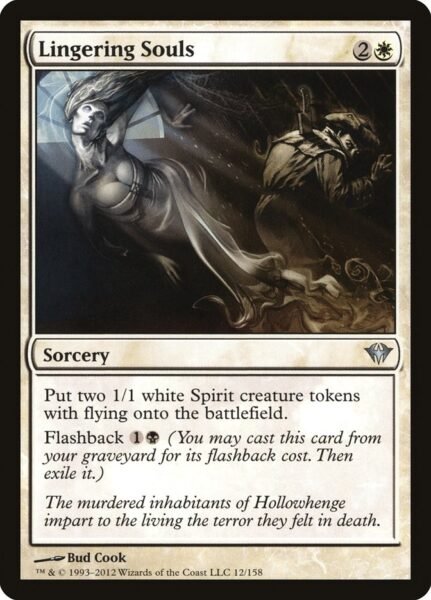
| Lingering Souls | .23 cents |
| Practiced Offense | .55 cents |
| Spectral Procession | .30 cents |
| Starnheim Unleashed | $1.52 |
| Cleansing Nova | .35 cents |
| Invoke Despair | .40 cents |
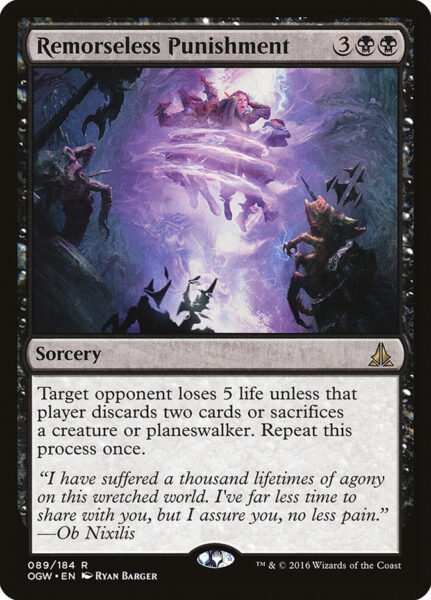
| Remorseless Punishment | .34 cents |
| Season of the Burrow | $1.55 |
| Emeria’s Call | $3 |
Lands (38) + 1 mfdc – Total Price: $26.73
Abandoned Air Temple $5.97
Barad-dûr $1.35
Bojuka Bog $1.09
Castle Ardenvale .29 cents
Caves of Koilos .99 cents
Command Tower .32 cents
Concealed Courtyard $1.15
Dalkovan Encampment .45 cents
Emeria, Shattered Skyclave (mfdc)
Fetid Heath .50 cents
Great Arashin City .33 cents
Isolated Chapel .44 cents
Midgar, City of Mako $2.40
Realm of Koh .40 cents
Shambling Vent .49 cents
Shattered Sanctum $1.90
Temple of Silence .27 cents
Vault of the Archangel .60 cents
Westvale Abbey $3.99
Windbrisk Heights .30 cents
Plains (11)
Swamp (8)
Current total: $100.56
Deck Tech
Primary Game Plan
This deck wants to make a bunch of 1/1s on the cheap to sacrifice to our commander in order to copy some powerful sorceries. But rather than fill our deck with token makers and high-mana costing spells, I’ve chosen powerful and efficient support cards (instants and sorceries) to copy. Our goal, then, is to gain incremental advantage by copying our targeted removal, card draw, and token producers, rather than resolve a single powerful and splashy spell in the hopes it wins us the game.
While it is tempting to go this latter route, I think that way leads to death. There are a couple of reasons why.
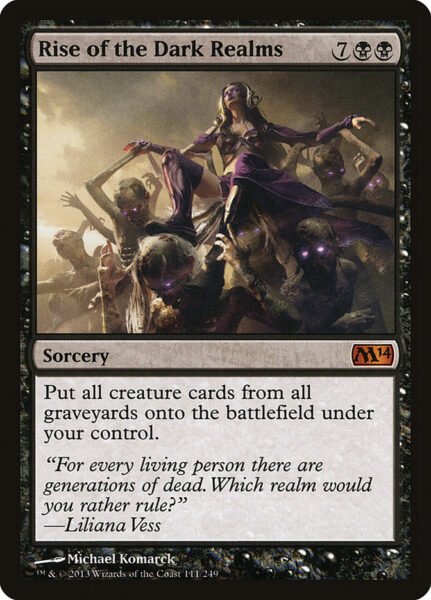
First, many of the splashiest spells in Black aren’t really worth copying. Rise of the Dark Realms, for instance, won’t give us twice as many creatures from the graveyard. Interestingly enough, the same goes for White, as well. Wrath of God twice isn’t better than once. So, really, Orzhov colors incentivize us to take this incremental advantage approach, rather than the big splashy one.
The second reason the big splashy approach is a siren song is that filling your deck with token makers and high CMC bombs will lead to a lot of durdling. Sure, we can have some aggressive starts if we make a bunch of tokens in the first few turns, but lowly 1/1s rarely win Commander games. Alternatively, we can slowly die as our big sorceries rot in our hand if we draw those instead.
The spells we want to copy, then, are meant to put us twice as far ahead as they would normally. What’s better than drawing two cards? Drawing four. And so forth. What this allows us to do is not be completely reliant on our commander to compete. Sure, we’d love to double up all of our instants and sorceries, but we should be able to navigate a fair, midrange game without that. Will we win? Maybe, maybe not. But playing powerful and efficient instants and sorceries means we won’t die with a bunch of 7-, 8, and 9-mana spells in our hand.
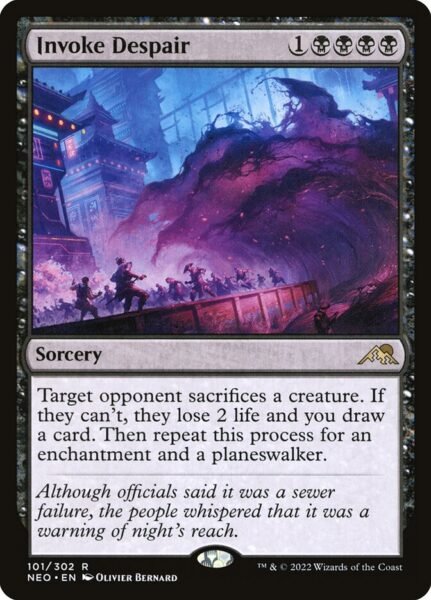
Of course, we are playing a few powerful sorceries that can doubly punish our opponent with our commander out. Are these better than unconditional sweepers? Maybe not, but they are way more fun.
Our deck can be divided into two major parts: token generation and instants/sorceries to copy with our commander. Some of our best cards are both.
Token Generation
We have two ways of making tokens: via sorceries and instants and by permanents on the battlefield. Both are important to the deck’s success, as many of the instants and sorceries that make tokens only make 1/1s. Of course, enough 1/1s will win us the game just fine, but we want some number of creatures with stats that can compete in combat.
Tokens via Instants and Sorceries
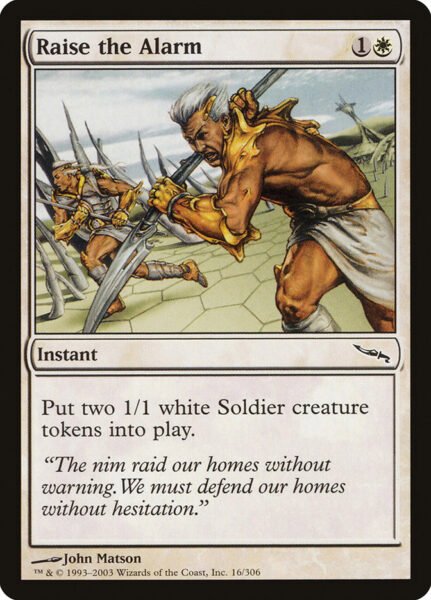
I won’t lie. It feels really good sacrificing a single token to make four. Or six. An early Raise the Alarm will allow us to get four 1/1 flying Spirit tokens from the front end of Lingering Souls. And we can always use one of those Spirits to get four more when we flash it back. Do this enough times with all the ways we have of making tokens and ours is a true go-wide strategy.
Entreat the Angels – I am so happy to play this card! I started playing Magic again right before Avacyn Restored came out. And it was the first prerelease I ever attended. I wasn’t so lucky as to open this card then, but I loved everything about it. And I still do. It’s a perfect fit for our deck and will win us the game if all our pieces are in place and we cast if for its miracle cost.
Emeria’s Call – is a lot, but since it’s also a land, I’m excited to include it in the deck. It gets us the same number of Angels as a hard-casted Entreat the Angels. Four 4/4 fliers will often be game over for our opponent.
Gather the Townsfolk – we want cheap ways to make tokens for two reasons. First, casting this on turn 2 or 3 will set us up to use our commander the turn we untap with it. Second, in the late game, we want to be able to make tokens and immediately cast another spell with our commander out.
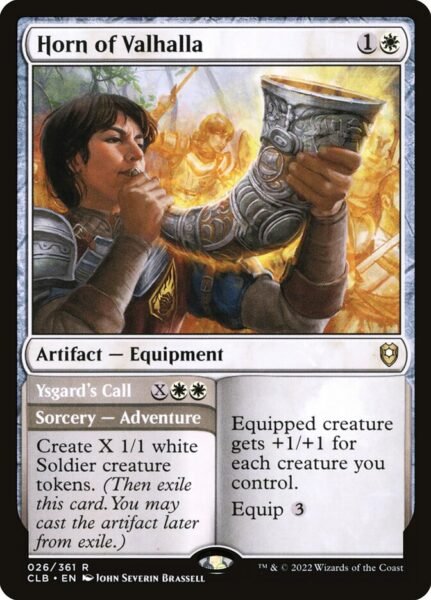
Horn of Valhalla – well, really, this should read Ysgard’s Call, because that’s why we’re playing this card. Both sides are great in our deck. This was my first diamond-in-the-rough find for this deck. Coming across cards like this is one of my favorite parts of brewing!
Lingering Souls – so powerful it was banned in Limited! What a great card for us. Don’t underestimate the power of 4 flying 1/1s. Double that and, well, the card is even better!
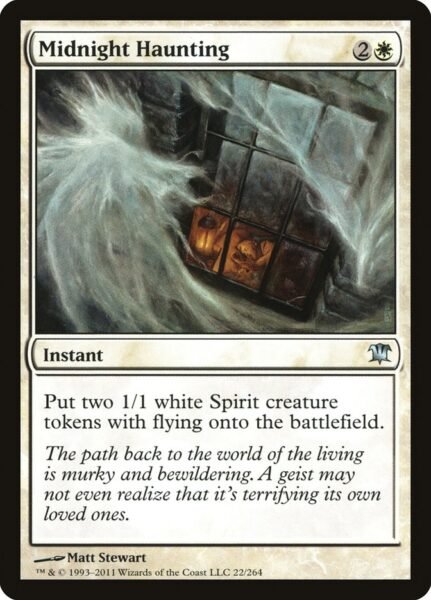
Midnight Haunting – before Lingering Souls there was this card. We trade flashback for instant speed. And while the former is more powerful, having evasive surprise attackers isn’t so bad either.
Moogles’ Valor – another card that does two things we want: make tokens and protect our team. Oh, and it can gain us life, which makes it three things we want. is quite a lot for a protection spell, but as a token generator that we can double with our commander, it is excellent.
Raise the Alarm – another instant that gives us two tokens.
Rootborn Defenses – a protection spell that generates a single token for . Not too shabby since we’re on a budget.
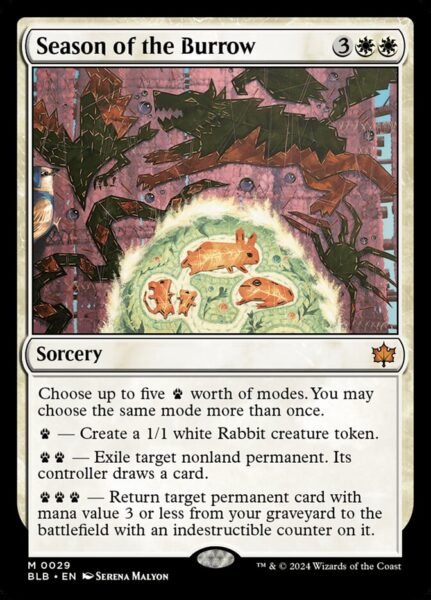
Season of the Burrow – a late addition to the deck, I originally decided Rabbits just weren’t on theme enough. Then I saw the power of doubling up big token-making spells and quickly made room for this one. Its flexibility is where it really shines for us, since we’ll be casting two copies of it.
Secure the Wastes – a great card that scales up for us. We can cast it on our opponent’s turn 3 end step to get two 1/1s, untap, and cast our commander to ensure we have fodder for sacrifice. Later, we can easily make 10 or more tokens.
Spectral Procession – three 1/1 fliers for is a great rate!
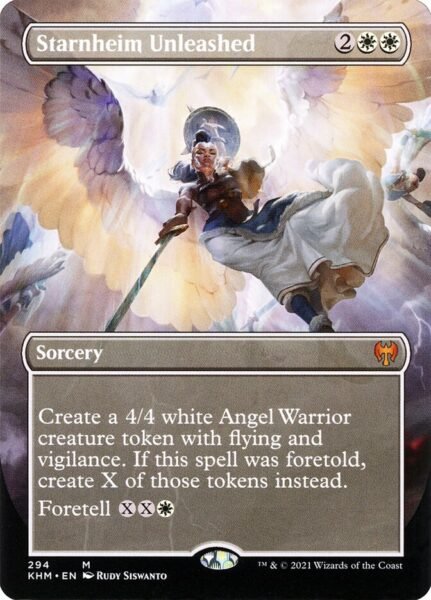
Starnheim Unleashed – another Entreat the Angels effect that comes with the added benefit of flexibility. Foretelling for is a great turn 2 play for us, but it’s also a great late-game draw.
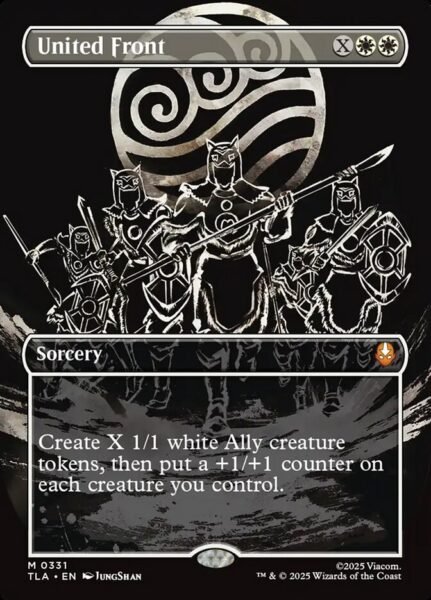
United Front – I can’t believe this card is under $3. This is a unique effect for what it does. We have spells that make tokens. We have spells that put +1/+1 counters on all of our creatures. But we don’t have a card that does both. Pick up your copies while they’re still cheap-ish.
White Sun’s Twilight – I’m choosing this sorcery over White Sun’s Zenith mostly because I don’t own a copy of the latter. That being said, I like Twilight over Zenith because it costs less, gains us life, and gives us an alternate win condition via infect, however unlikely this will be. Of course, in the late game, we can easily make 10 or more Phyrexian Mites and force our opponent to answer them or die.
Tokens via Permanents
The other half of our token generation comes from permanents. Sure, we don’t get to copy these with our commander, but, honestly, that’s on purpose. I don’t want to go all-in on the tokens-via-instants-and-sorceries route. I think it’s too fragile of a gameplan. Sure, when you’re making 4/4 flying Angels, that plan seems really powerful. But, given our budget restraints, we can’t reliably count on doing that every game.
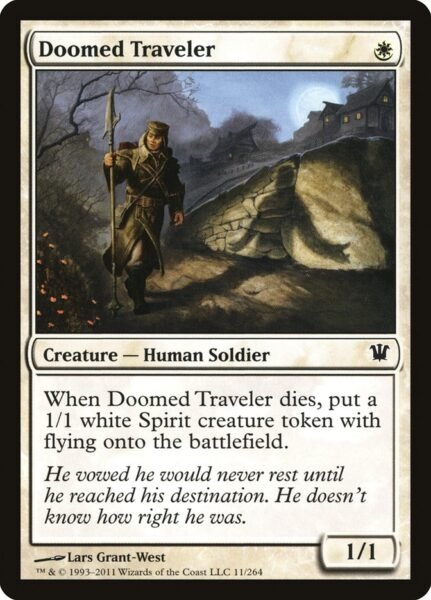
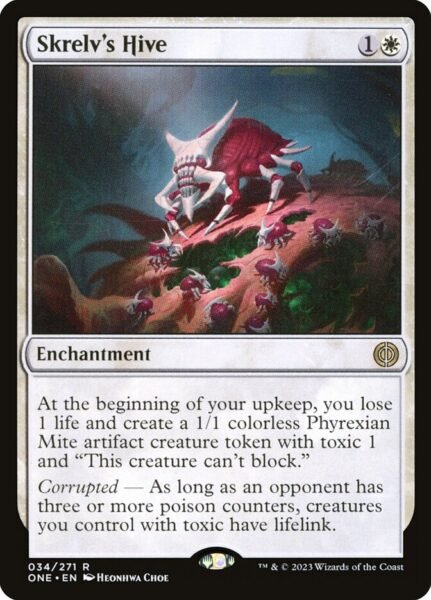
In order to give us legitimate bombs, then, we’re playing several permanents that synergize with our overall gameplan, but that can also win on their own (more or less). Alongside these threats, we’re playing a number of cheap token generators attached to less impressive permanents. Some of these replace themselves on death (Doomed Traveler); while some generate a token on entering (Sanguine Evangelist); while others give us a token repeatedly (Skrelv’s Hive).
Add this all together and we have a powerful go-wide strategy that can overwhelm our opponents via sheer numbers. We also have ways to grow our team, but more on that later.
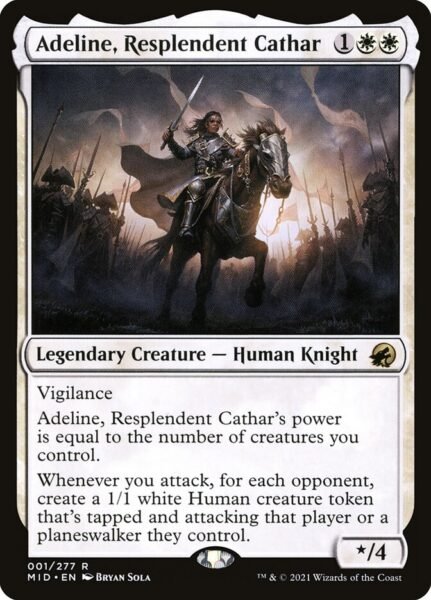
Adeline, Resplendent Cathar – I’ve built several decks that can take advantage of this Human Knight, but I’ve always cut her for something else. I tell myself, I’ll save her for my Knight Tribal deck. Alas, I’ve yet to built that one. So, rather than play Brimaz, King of Oreskos in yet another deck, I’m finally giving Adeline a chance to shine. Besides bringing a token with her when she attacks, her power will frequently hit double digits for us.
Barad-dûr – the first of several lands that can make us a token to sacrifice. We should have no problem triggering morbid on to amass Orcs.
Castle Ardenvale – four mana is a lot for a lowly 1/1, but it comes at nearly no risk.
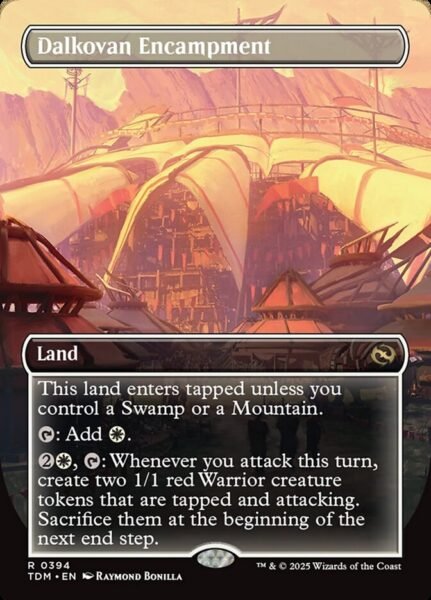
Dalkovan Encampment – now this is a better rate! One mana less for two tokens. Sure, they don’t stick around, but we weren’t planning on that anyway.
Doomed Traveler – the OG sacrifice fodder from the first Aristocrats deck.
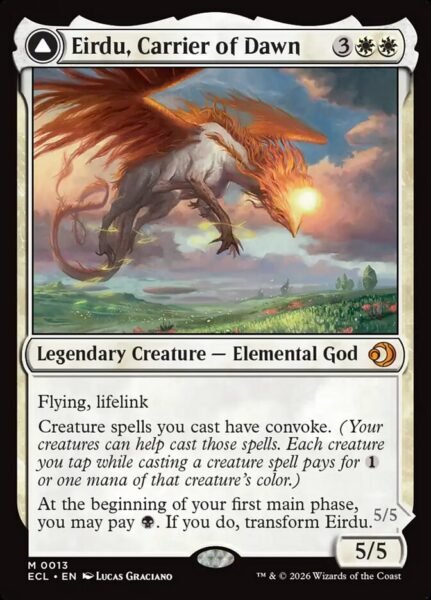
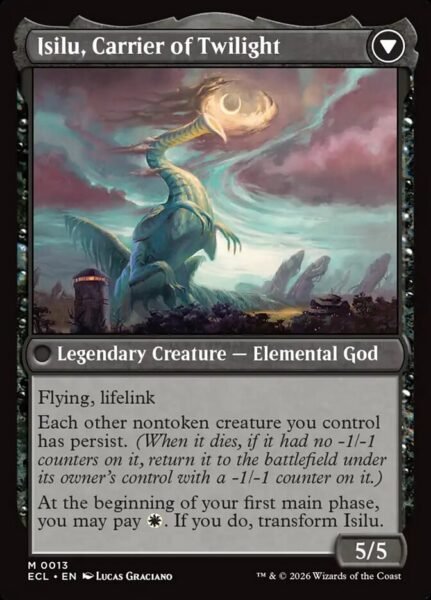
Eirdu, Carrier of Dawn / Isilu, Carrier of Twilight – both sides of this mythic are relevant to our deck, but Isilu, Carrier of Twilight allows us to sacrifice our nontoken creatures to our commander without losing them for good.
Emeria Angel – I do love me some landfall! I resisted including other commonly played landfall cards (Felidar Retreat) that synergize with our strategy because I’m playing them in other decks. I chose this one mostly because it makes fliers. However, there are quite a few synergistic landfall cards that you could include if you are so inclined.
Great Arashin City – another low-risk inclusion that can give us a token in a pinch.
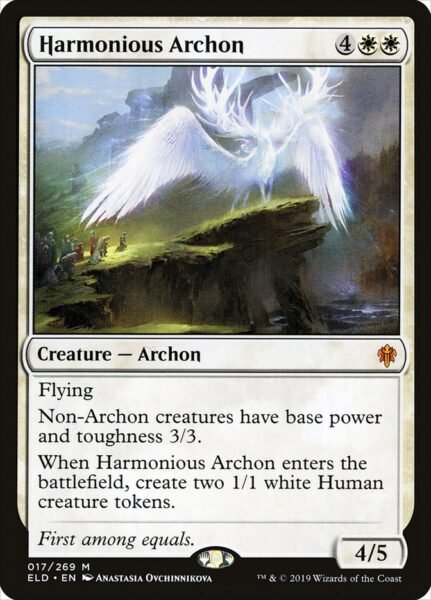
Harmonious Archon – my second diamond-in-the-rough card for this deck. Not only does it bring tokens with it, but it grows all of our lowly 1/1s. It also happens to shrink our commander, but it’s universal, so all of our opponent’s creatures will also likely be weakened. What a fantastic card for us! On a side note: I’d love to make an Archon Tribal deck in Commander, but there are only 21 total Archons and just two legendary creatures to choose from.
Hunted Witness – in a rare example of power shrink, Hunted Witness is strictly worse than Doomed Traveler.
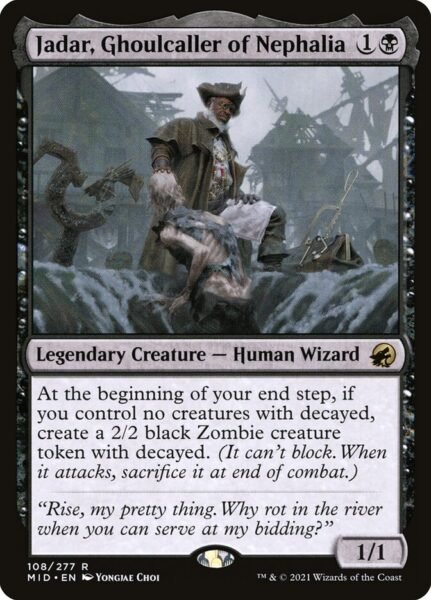
Jadar, Ghoulcaller of Nephalia – one of our more expensive cards at nearly $4, this Human Wizard sees play in a bunch of sacrifice decks. Our use for it is no different. Every turn we get a new creature to sacrifice.
Kambal, Profiteering Mayor – another big money card for us ($5.30), it gives us token generation linked to our opponent’s cards. The second block of text is a nice payoff for us, though not as good as when I first read it and thought it triggered for every token that entered. Alas, it says one or more, so Lingering Souls will only get us 1 point of drain and gain. Of course, when we copy it, the spells resolve separately, so that means 2 points total. Not bad.
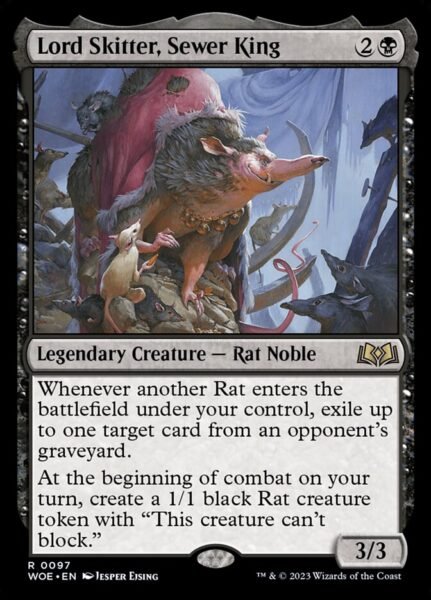
Lord Skitter, Sewer King – another pricey card for us (this one is over $6!!!). All three are legendary creatures, which is probably why they’re so expensive. I played this Rat Noble in Modern and it was a blast. Don’t underestimate the power of making a token every turn, not to mention the graveyard hate it gives us. And all on a 3/3 body.
Monastery Mentor – I was stunned to find this mythic to be under $1. I remember when it was over $40. For our deck, it can serve as the centerpiece of victory. Every copied instant and sorcery will bring 2 1/1 Monks with prowess that we can sacrifice to our next instants and sorceries. What an engine for our deck!
Oketra’s Monument – we have 10+ creatures that can trigger this, not counting our commander. The cost reduction this artifact gives us is just as important as the body we get on the cast trigger.
Realm of Koh – another land that can produce token creatures.
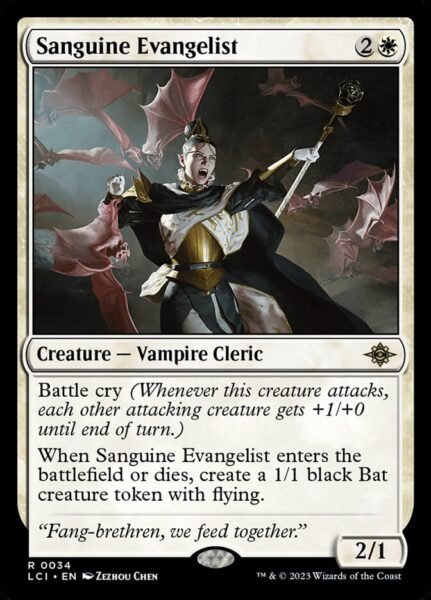
Sanguine Evangelist – this card does so much for us. It brings a token with it when it enters. It leaves one behind when it dies. And it pumps our team of dorks on attack. That’s a lot to keep track of if you’ve never played it before. Not that I learned this the hard way or anything…
Shambling Vent – I don’t usually play creature lands in Commander unless they synergize with our strategy. However, since I mostly play Duel Commander, there will be games when attacking or blocking with a creature land is all either of us has going on. For this deck, we can activate it and then sacrifice it to our commander in order to double up an instant or sorcery. We won’t want to do this unless we’re winning this way or not dying.
Skrelv’s Hive – a budget Bitterblossom. Technically, it gives us an alternate win condition, so that’s cool.
Suki, Courageous Rescuer – another way to buff our team attached to a token generator. Sure, we have to use our commander’s static ability on our turn, but that’s fine. Every sacrificed token replaces itself in that situation.
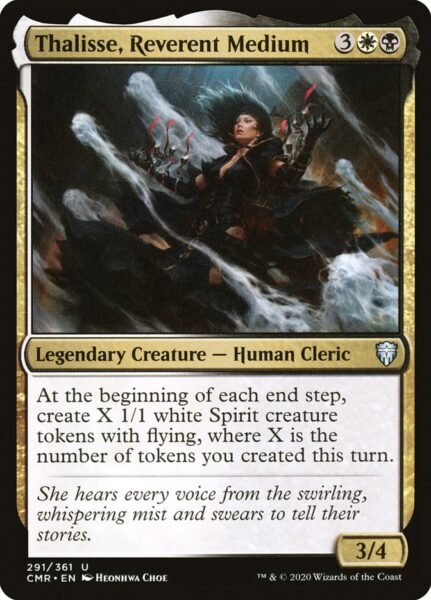
Thalisse, Reverent Medium – by herself, this Human Cleric is pretty meh, but with any of our numerous token generators, we double our army. AND, it triggers on every end step.
Tithe Taker – I had originally pulled out Butcher Ghoul as another creature that replaces itself, but Tithe Taker is strictly better.
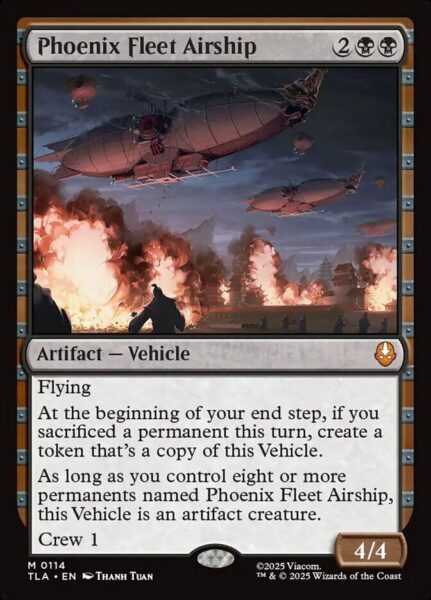
Phoenix Fleet Airship – another super fun card I played in Modern that I’m stupidly excited about for this deck. Left unanswered, this artifact can easily take over a game.
Warren Warleader – I left this Rabbit Knight out of my list at first since I just included it in my Trigger Copy deck with Kirol, Attentive First-Year. However, this budget-friendly mythic does everything we want in a permanent. It makes tokens and it can grow our attacking dorks.
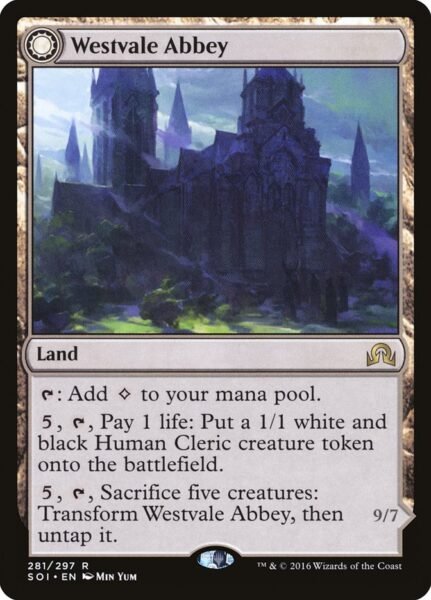
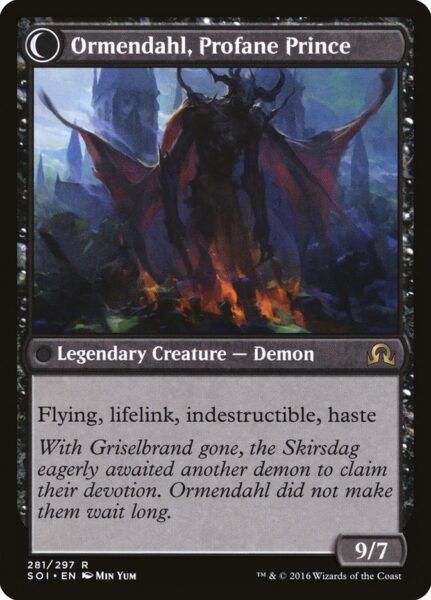
Westvale Abbey – one of my all-time favorite cards, this land can make us tokens to sacrifice to Silverquill, the Disputant…or it can turn into a game-ending threat. We make so many tokens that it should be no problem flipping this land.
Honorable Mention
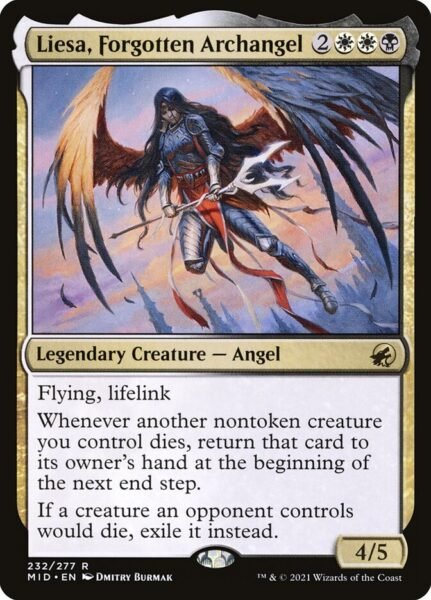
Liesa, Forgotten Archangel – while not generating any tokens, this Angel does allow us to sacrifice our non-token creatures, then recast them the following turn. This is especially great when we’re sacrificing Doomed Traveler, but, in a pinch, we can sac one of our better creatures to double up a necessary instant or sorcery.
The Beats
Given how many tokens we can generate and the sheer number of creatures we can throw at our opponent, we will sometimes rather win the old-fashioned way than via any fancy instant-copying. Growing our team with Glorious Anthem effects, then, is a secondary win condition. Having a back-up plan is, of course, crucial if our opponent is able to shut down our commander. But this plan also complements our primary plan of getting extra value out of our instants and sorceries, since many of these anthem effects can be copied. We want to make tons of creature tokens to sac to our commander or to lower our opponent’s life total.
Another important aspect of this secondary plan is that it insulates us from enchantments and creatures that give all of our creatures -1/-1 (Ethereal Absolution) or -2/-2 (Elesh Norn, Grand Cenobite), not to mention sweepers that do something similar.
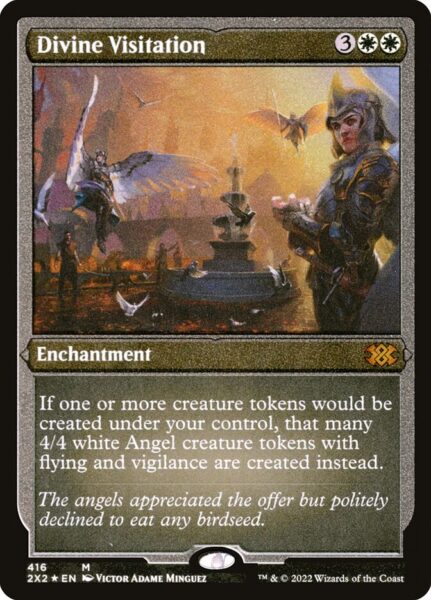
Divine Visitation – I was on the fence about this card because I play it in my Omnath, Locus of Creation deck, but then I stopped being crazy and made room for it.
Harmonious Archon – I’m still just as stupidly excited about this card as I was when I discussed it above. I really hope reality doesn’t ruin my party. What we really want from this mythic is to make all of our 1/1 flying Spirit tokens 3/3s. Surely there’s no way that can go wrong? Right? Right???
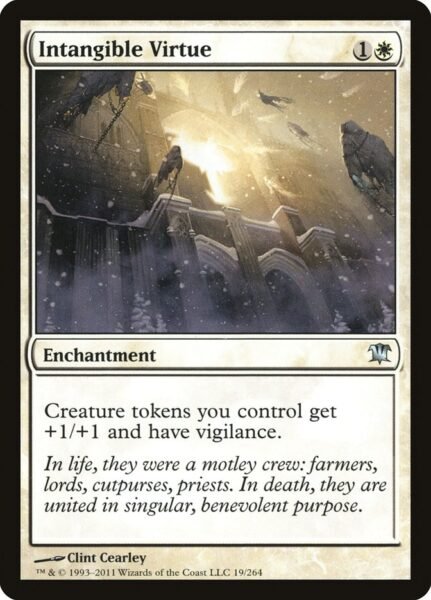
Intangible Virtue – anthem effects derive their name from Glorious Anthem. Intangible Virtue is strictly better for tokens.
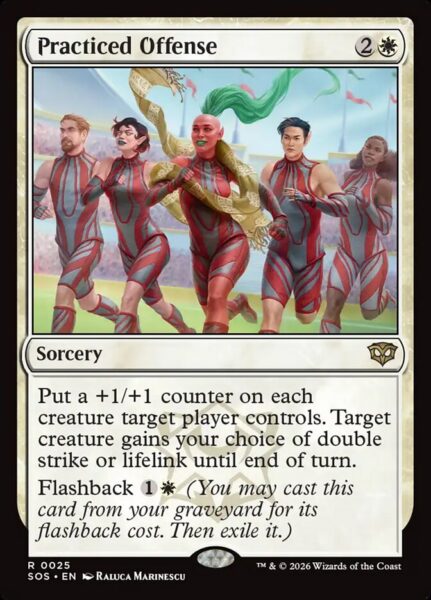
Practiced Offense – I won’t lie. Even though I cited this as one of my auto-includes for decks that care about counters and/or go-wide strategies, I keep eyeing it to make room for something more splashy. Then I remember that our plan is to double this…twice, ideally in the same turn. That’s four +1/+1 counters on all of our creatures. I also remember how I was in a position to win if I had untapped with my board thanks to this card. Alas, I did not untap with my board, but still!
Requisition Raid – flexibility coupled with its cheap CMC is why this sorcery is in the deck. Again, we plan on doubling this, meaning our entire team will get two +1/+1 counters for just .
Sanguine Evangelist – our weakest anthem effect, it’s likely we’ll get just one +1/+0 boost from this Vampire Cleric. That’s okay. It does more for us than just this.
Suki, Courageous Rescuer – the deadly side of Glorious Anthem that also synergizes with our token generation.
Power creep or just a bad card versus a good card?
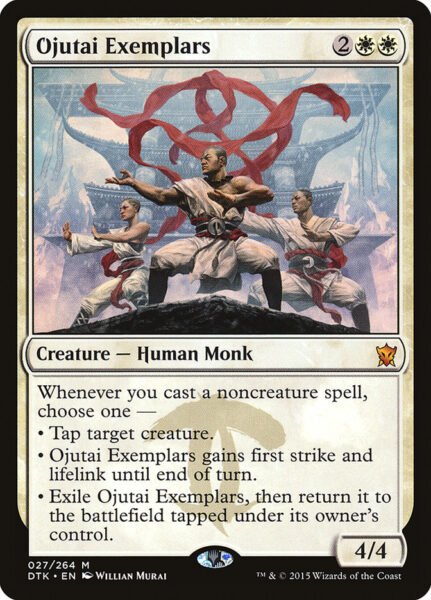
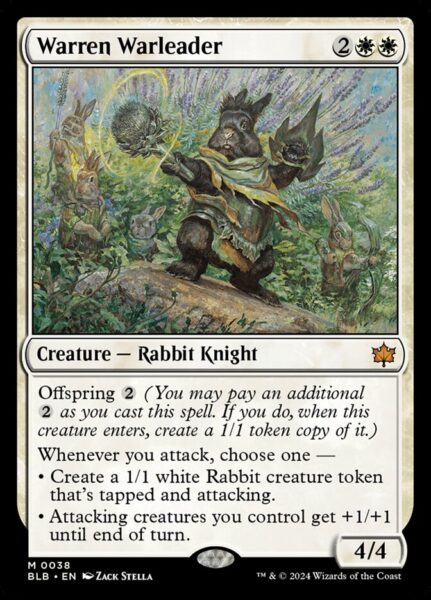
Warren Warleader – I’m still stunned every time I read Warren Warleader‘s textbox. Today, I remembered looking at Ojutai Exemplars and commenting, with all that text, it’s bound to be good, right? Wrong. The Rabbit Knight doesn’t have that problem. All of its text is highly relevant and super synergistic with our strategy. And offspring! What a powerful mechanic!
Just Missed the Cut
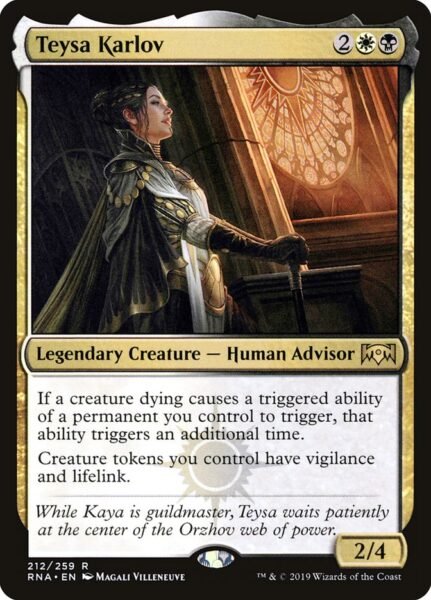
Teysa Karlov – I really like this card as an anthem effect that should be able to put us out of range of dying pretty easily. I originally included her when I was running a Blood Artist package of drain and gain upon death. Without that, we aren’t really getting full value out of this 4-drop. Still, if you want to go the death trigger route, I think she is an obvious inclusion.
The Bombs
Sure, we’re a grindy, Midrange deck looking to gain incremental value from doubling up inoffensive spells…but we still want some bombs that can let us turn the corner to victory. These are them. I’ve written about each of them already, so I’ll list them and move on.
Divine Visitation
Entreat the Angels
Invoke Despair
Phoenix Fleet Airship
Remorseless Punishment
Starnheim Unleashed
White Sun’s Twilight
Removal
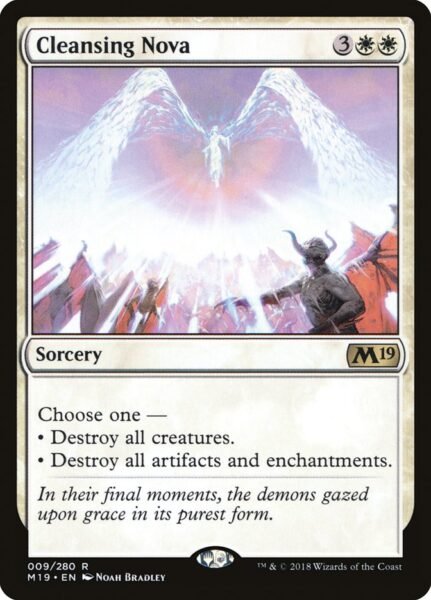
Being in Orzhov colors means we have access to some of the game’s best removal. And while I don’t usually spend a lot of time talking about removal for my Commander decks, I feel like an explanation of my choices will be beneficial. I’m also hoping for your input on any better options that I missed. One big question is how many sweepers do we want to play. After all, doubling up Wrath of God or Damnation doesn’t net us any extra value. But, as you can see, a card like Cleansing Nova CAN get us extra value if copied, which is the main reason I’m including it.
Archenemy’s Charm – modal spells are particularly powerful in our deck for obvious reasons. Unlike Orzhov Charm, though, all of these modes are relevant for us. The second mode doubled up can get us four creatures from our graveyard! That’s some serious value.
Cleansing Nova – choosing just one is for chumps.
Damn – another flexible sweeper. Killing two creatures is great, while we’ll be happy to use it to sweep away the board when we need to.
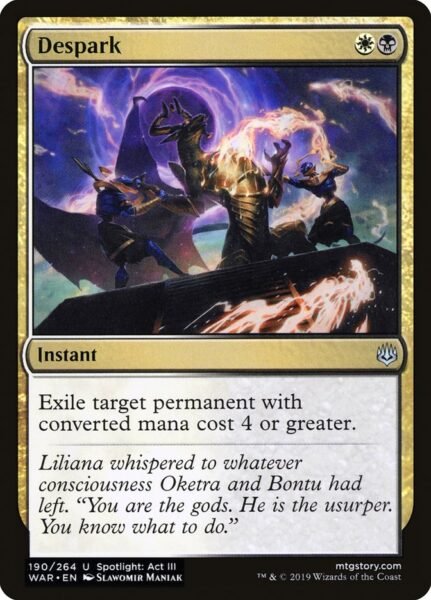
Despark – the first of our flex spots for removal. I like that it’s just two mana. I like that it’s instant speed. And I like that it exiles. I don’t like its limitation of 4 mana cost or greater. But is Utter End worth the extra two mana? Is Vindicate better even if it doesn’t exile? These are the questions I need answered, but I’m going with this one for now.
Path to Exile – 1-mana catch-all for creatures. We can also target our tokens to ramp us.
Season of the Burrow – another modal spell that really shines in our deck. If copied, we can effectively wipe the board, even if it draws our opponent a ton of cards. Then again, we can use it to refill our hand at the cost of some lowly tokens.
Swords to Plowshares – the OG Path to Exile.
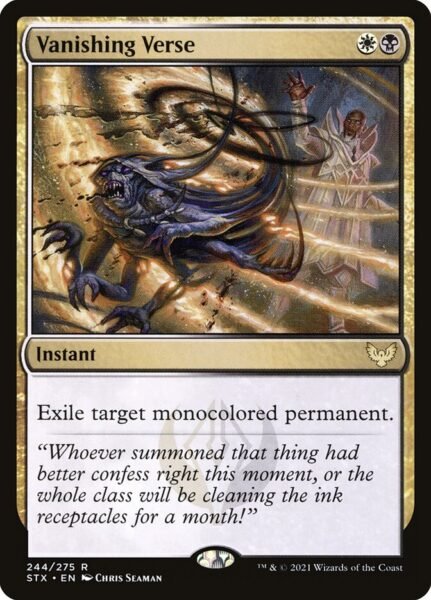
Vanishing Verse – our second flex spot. The same questions apply here as did for Despark.
Card Draw
Another part of the deck that can be altered considerably, thanks to Black’s many choices for drawing cards. Do we go for the 2-mana spells that come either at the cost of our life or a creature? Or do we use the 4-mana spells that typically give us some kind of card selection? Or, do we just go for budget-friendly tutors? I’ve gone with the first option.
Altar’s Reap – I like this card early as a way to find land or action, depending on our opening 7. Be careful how you use it late, though. Copying it will require a sacrifice of four creatures.
Cling to Dust – some graveyard hate that should draw us a card…twice. Or four times.
Costly Plunder – we don’t play too many artifacts, but it’s nice to have options!
Midgar, City of Mako – any card that does two things is automatically better than a card that can only do one.
Night’s Whisper – Sign in Blood without that flexibility.
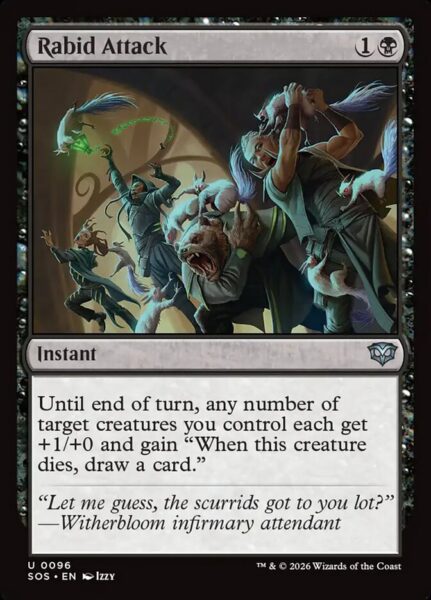
Rabid Attack – I love this card! Not only does it function as a gotcha card in combat, but we don’t have to wait until our opponent kills our things to use it to draw cards. Couple this with Altar’s Reap, and we’ll sacrifice a total of five creatures and draw 14 cards. WOW!
Season of the Burrow – we can target our own creatures to dig for what we need.
Sign in Blood – I love the flexibility we have with this card in that we can use it to burn our opponent out if they’re low enough on life.
Village Rites – a 1-mana Altar’s Reap.
Windbrisk Heights – we shouldn’t have any problem casting the card we exile with hideaway. If we do, we’re surely losing.
Protection Spells
When playing Duel Commander, it’s very likely our commander will get killed the first time(s) we play it. That’s where these spells come in. There is some flexibility in here, though it’s crazy how expensive some of these kinds of cards are (looking at you Ephemerate!).
Gods Willing – a budget-friendly way to prevent targeted removal with a bit of upside. We can also use it to punch through damage if necessary.
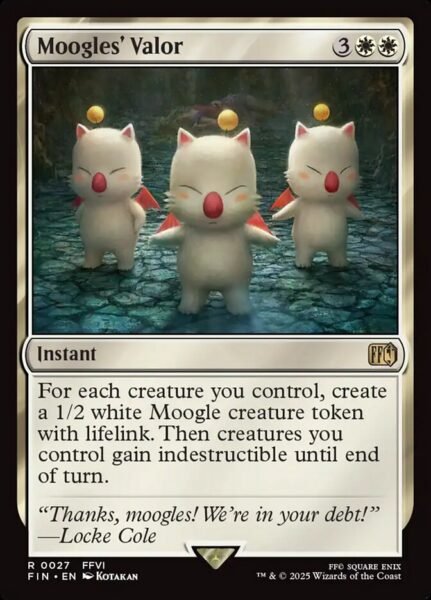
Moogles’ Valor – another protection spell with a lot of utility. Yes, is a lot, but since we get to make token creatures with lifelink and then give everything indestructible, we can use it to make a bunch of blockers when our opponent thinks they’ve got us.
Restoration Magic – yet another flexible spell with the added bonus of hexproof granted to our creature(s) that can help nerf an exile spell.
Rootborn Defenses – one of the first protection spells that does something else.
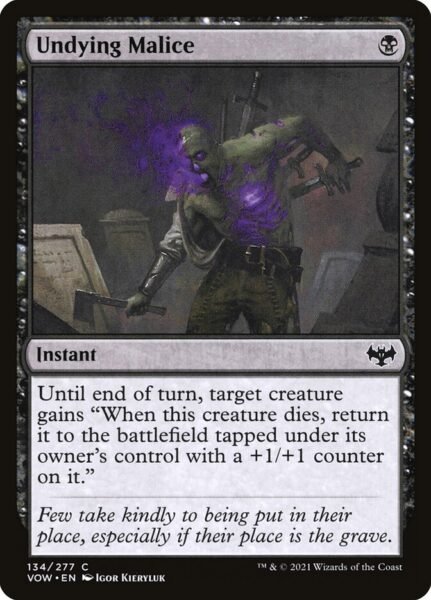
Undying Malice – buffs the creature that dies.
You may have noticed a lack of hexproof/ways to protect against exile effects. Some of this is price related. The mass protection spells that grant hexproof or that can nerf something like Farewell are pretty pricey (Teferi’s Protection) or don’t play well with tokens (Scapegoat). Still, the latter is a useful budget inclusion as a means to protect our non-token creatures since they are all token generators themselves.
Some of the commonly played Black spells that can protect our creatures are also not very budget-friendly. Not Dead After All is nearly $2. Meanwhile, Malakir Rebirth is more than $14 (!!!!) since it’s also a land. Something like Fake Your Own Death costs , rather than a single . Supernatural Stamina is the most budget-friendly of the bunch. I just have to find this Amonkhet common in my collection…
Ideal Hand and Game Play
We would like at least three lands alongside one or two ways to generate tokens within the first few turns. A kill spell or draw spell is also ideal. And while we only play five artifacts that ramp us, we’re always happy to see one in our opening hand. I say only, here, because if we really wanted ramp in our opening seven, then I’d increase this number, but I can’t bring myself to do that. Finally, one of our bigger creatures or spells for something to play to is great. What we don’t want is a hand full of our payoff cards alongside four or more lands (or two or less).
We want to spend our opening turns laying the groundwork for our commander. We want enough token generation early that we can start sacrificing creatures to Silverquill’s static ability as soon as we untap with him. But we also want instants and sorceries to copy. Without a permanent to generate a token every turn, then, we will want an instant or sorcery that makes tokens as the first spell we copy to ensure we have the fodder for sacrifice.
One fork in the road you’ll encounter is whether or not to cast your early card draw or removal before resolving your commander. Obviously, the game will dictate this decision. You don’t want to let your opponent untap with a must-kill commander simply because you want double value out of your Swords to Plowshares. And you don’t want to miss land drops with a card-draw spell sitting in your hand.
But there will be times when allowing a creature to live, even when it means we aren’t using our mana for anything that turn when we could kill it, is the right play precisely because we’ll be able to get double the value once we resolve our commander. In these situations, we will ideally be committing our own permanents to the board until we get to four or five mana and can cast Silverquill and immediately follow it up with another spell.
Weaknesses
We are a grindy midrange deck that is heavily reliant on amassing an army to win via combat. For this reason, sweepers are our great weakness. We don’t have a lot of bombs that can singlehandedly catch us back up after our board is wiped. Instead, we have to rebuild from the beginning. For this reason, it’s important that we don’t overextend. Holding onto a token generator when we have a board full of them is a good way to insulate us from a sweeper.
Flex Spots
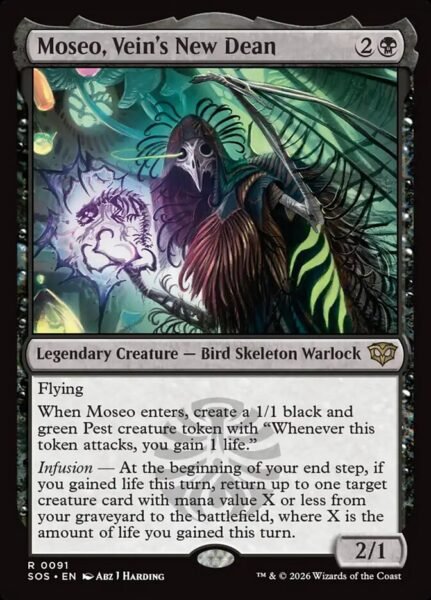
I’ve mentioned several cards already that I almost included or that could find a home. Generally speaking, you could easily swap out any number of cards from each section and replace them with something that does the same job. For instance, Moseo, Vein’s New Dean could replace Sanguine Evangelist. We’d be trading battle cry for recursion. Similarly, we could take out one or two of the instants or sorceries to make room for a card like this. Be wary of thinning that group of cards too much, though.
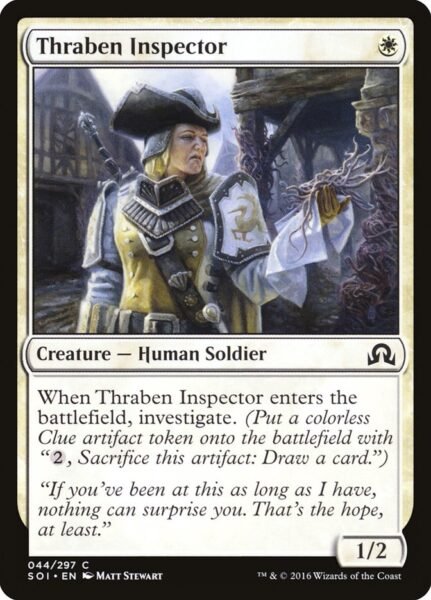
Another route you could take is to find other ways to gain value from the creatures you want to sacrifice. A card like Thraben Inspector brings us additional value upon entering, so we won’t mind sacrificing it later.
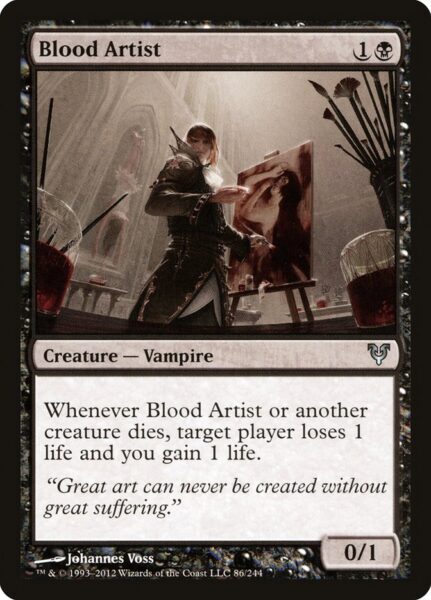
I originally had a handful of Blood Artist effects in the deck. This angle of attack is certainly doable in our deck. I play Aristocrats elsewhere, though, and I wanted to try out some other cards. However, if you are interested in using Blood Artist to give the deck some more reach, I’d suggest including more sac outlets beyond Silverquill, the Disputant. If you’re only gaining incremental life drain and gain, these cards are too unimpactful. But if you want to have a chance at draining your opponent in one turn, then you need a repeatable sac outlet.
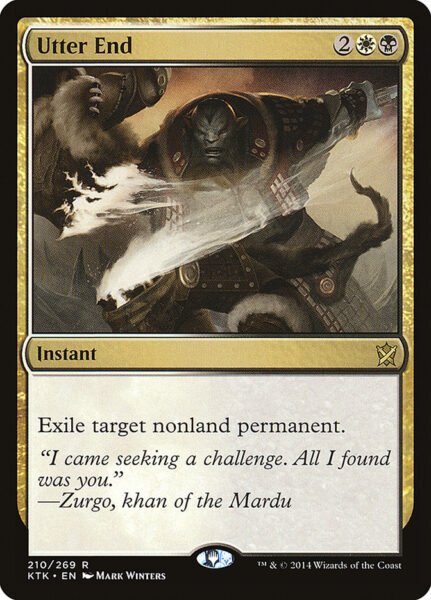
Finally, as I mention above, there are a number of other kill spells we could include. Let me know which ones you think are best.
Alternatives
Debt to the Deathless
Drain Life
Exsanguinate
Rite of Oblivion
White Sun’s Zenith
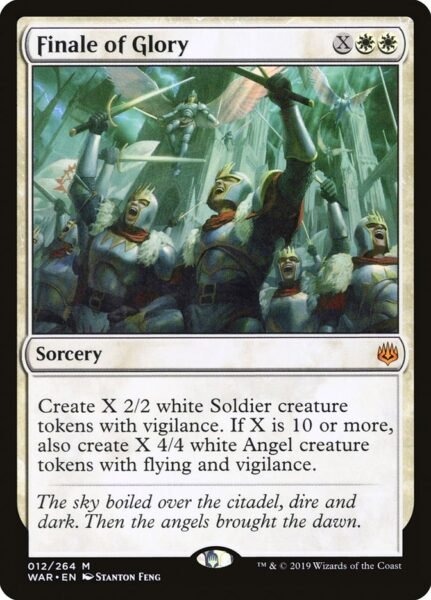
Finale of Glory
Brimaz, King of Oreskos
Doom Foretold
Revival // Revenge
Teysa, Orzhov Scion
Utter End
Anguished Unmaking
Vindicate
Fracture
Blot Out the Sky
Consuming Vapors
Kaya’s Guile
Duty Beyond Death
Wizened Mentor
Obsessive Pursuit
Vito, Fanatic of Aclazotz
Feast of the Victorious Dead
Heliod’s Intervention
Wish List
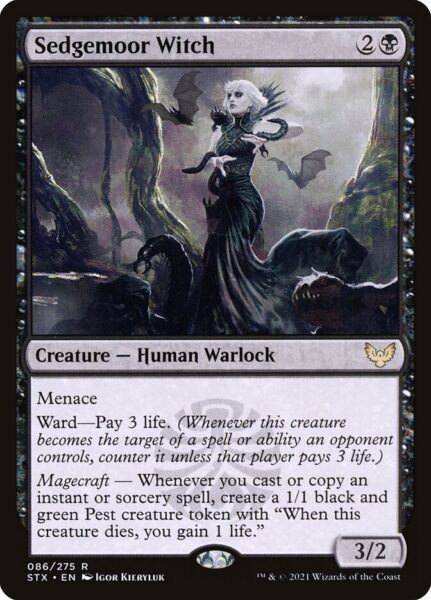
Sedgemoor Witch
Inkshield
Bitterblossom
Elesh Norn, Grand Cenobite
Annointed Procession
Mondrak, Glory Dominus
Ephemerate
A note about token doubling: these cards would no doubt give us some very explosive turns, but since we’re already doubling our instants and sorceries (assuming everything goes right), this strategy is likely to be win-more. I know, I know. Why wouldn’t we want eight Spirit tokens instead of four? 12 instead of six? We’d have to cut something somewhere and I really like the way the deck is now. I don’t want to cut something unique that I don’t play elsewhere for generic token doubling, particularly when I don’t think it’s necessary. So, even if these cards were within our price range, it’s doubtful I’d run more than one or two.
Conclusion
Silverquill, the Disputant is a fun and powerful commander to build a deck around. I really appreciate that he only costs 4 mana. In past years (including our first visit to Strixhaven), the Dragons were too mana-intensive. There is a huge difference in resolving this on turn 4 or 5 than on turn 5 or 6.
I also really like the tension between needing creatures to sacrifice and instants and sorceries to copy. Having a bridge between these two opposing needs in the form of instants and sorceries that make token creatures is both fun and rewarding.
If you like token strategies that can go wide or generate extra value in other ways, then give this deck a shot. There is a ton of room for innovation here, especially if you’re not on a budget.
Thanks for reading! Let me know in the comments what you think!