by Johnny Cycles, July 4th, 2026
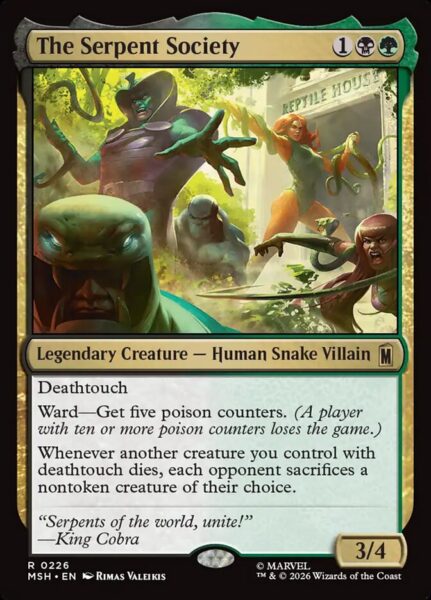
Looking for a powerful new commander that incentivizes a variety of strategies? Love deathtouch creatures but have given up on Fynn, the Fangbearer as a viable commander? Interested in Snake Tribal? Then The Serpent Society is the card you’re looking for! And what’s even better about this new rare from Marvel Super Heroes is that there’s a good chance your opponents will think you’re doing one thing, while you’ll actually be doing another. Oh, and along the way, we get to annoy our opponents as early as turn 3. Read on to find out how!
Decklist – The Serpent Society
| The Serpent Society |
Creatures (25) – Total Price: $51.39
| Cecil, Dark Knight | .96 cents |
| Tinybones, the Pickpocket | $5.46 |
| Noxious Newt | .29 cents |
| Glissa Sunslayer | .47 cents |
| Hooded Blightfang | .49 cents |
| Isareth the Awakener | .25 cents |
| Pharika, God of Affliction | $3.50 |
| Plague Engineer | .36 cents |
| Preacher of the Schism | $1.35 |
| Qarsi Revenant | $1.04 |
| Rhonas the Indomitable | $5.95 |
| Unstoppable Slasher | $4.51 |
| Varragoth, Bloodsky Sire | $3.39 |
| Vraska, the Silencer | $1.31 |
| Body Launderer | .99 cents |
| Disciple of Bolas | .40 cents |
| Questing Beast | $3.50 |
| Terror of Towashi | .39 cents |
| Archpriest of Shadows | $1.49 |
| God-Eternal Bontu | .40 cents |
| High-Society Hunter | .40 cents |
| Ohran Frostfang | $4.99 |
| Sidisi, Undead Vizier | $8.69 |
| Witch of the Moors | .40 cents |
| Grave Titan | .41 cents |
Planeswalkers (1) – Total Price: .50 cents
| Grist, the Hunger Tide | .50 cents |
Artifacts (17) – Total Price: $29.01
| Infiltration Lens | $2.58 |
| Vorpal Sword | $3.02 |
| Arcane Signet | .47 cents |
| Blackblade Reforged | $3.08 |
| Dream-Thief’s Bandana | $1.31 |
| Golgari Signet | .39 cents |
| Talisman of Resilience | .40 cents |
| Thought Vessel | $2.75 |
| Transmogrant’s Crown | .40 cents |
| Altar of the Wretched | $1.03 |
| Fireshrieker | .30 cents |
| Forebear’s Blade | .31 cents |
| Mask of Griselbrand | .62 cents |
| Rhonas’s Monument | $1.14 |
| Sword of Light and Shadow | $7.22 |
| Sword of Vengeance | $1.17 |
| Pact Weapon | $2.82 |
Enchantments (5) – Total Price: $2.11
| Sixth Sense | .39 cents |
| Vampiric Rites | .25 cents |
| Blanchwood Armor | .25 cents |
| Snake Umbra | .79 cents |
| Crystalline Armor | .43 cents |
Instants (6) – Total Price: $4.08
| Village Rites | .37 cents |
| Abrupt Decay | $1.40 |
| Assassin’s Trophy | .83 cents |
| Costly Plunder | .25 cents |
| Golgari Charm | .92 cents |
| Tear Asunder | .31 cents |
Sorceries (6) – Total Price: $3.13
| Maelstrom Pulse | .30 cents |
| Cut of the Profits | .35 cents |
| Farseek | .67 cents |
| Pillage the Bog | .35 cents |
| Unnatural Restoration | $1.21 |
| Glistening Dawn | .25 cents |
Lands (39) – Total Price: $8.11
Access Tunnel .40 cents
Bojuka Bog $1.00
Command Tower .19 cents
Demolition Field .36 cents
Hissing Quagmire .25 cents
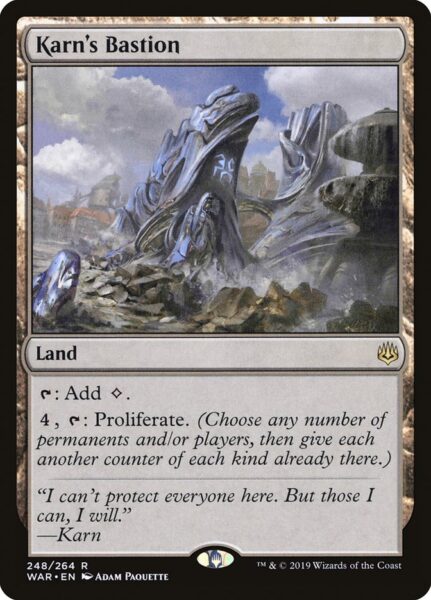
Karn’s Bastion .77 cents
Llanowar Wastes .25 cents
Reliquary Tower .70 cents
Rogue’s Passage .25 cents
Temple of Malady .50 cents
Woodland Cemetery .35 cents
Forest (14)
Swamp (14)
Current total: $98.69
Deck Tech
How to Build Around The Serpent Society
There are three ways to build around The Serpent Society. The most obvious, in my opinion, is to take advantage of its ward and win via poison counters. I assume most of our opponents will think that is our primary game plan. The second is to build an Aristocrat-style deck full of deathtouch creatures and sac outlets in order to keep the board clean, drain our opponents, and win via Commander damage. The third is a Voltron approach where we suit up our commander with powerful enchantments and equipment and force our opponent to answer it or die.
Primary Game Plan
We’re largely eschewing the Infect line for a combination of Voltron and Aristocrats, though if things go right, we’ll win via Infect in spirit when our opponent can no longer target our commander. My original plan was to go the Voltron route to force opponents between dying to damage or dying to poison counters, but The Serpent Society‘s last block of text is simply too powerful to ignore. Furthermore, Black is uniquely positioned both to sacrifice creatures for value and to recur them from the graveyard. Thus, the cards we’ve chosen as sac outlets suddenly become 3-for-1s with our commander out.
As to the Voltron plan, our commander essentially has hexproof and will die only to sweepers or edict effects in the right (wrong) spot. For this reason, we are safe to play all the fun enchantments, though the more reliable route is to play equipment. I’ve chosen some of both, but mostly went with equipment. In case you’re new to the game and don’t know why there is a difference, when an enchanted creature dies, the enchantment also goes to the graveyard. When an equipped creature dies, the equipment stays on the battlefield.
Thus, our primary game plan is to play The Serpent Society on turn 3, followed by a Voltron piece and start swinging in. In this scenario, we really want to have one of our big equipment cards (Blanchwood Armor, Fireshrieker, Sword of Light and Shadow) to put a lot of pressure on our opponent. With only 3 power, that’s 7 turns before we can kill one opponent with commander damage otherwise. That’s a lot of time for our opponent to find an answer. Furthermore, they’ll eventually kill it and pay the ward and the jig will be up once we don’t proliferate them to death.
If we have a playable 7 with no equipment, then we will want to follow up our commander on turn 3 with our utility deathtouch creatures. They facilitate our gameplan in more than one way, as I discuss below, while also increasing our clock. More importantly, they give us something to sacrifice in order to clear the way for our commander. If we’re able to get out ahead of our opponent like this and they are unfortunate enough not to have a creature on the battlefield when we untap with our commander, we will be in position to kill whatever creature they do resolve, assuming we have a sac outlet.
The Aristocrat aspect of our deck is definitely a subtheme, though we play nine ways to sacrifice a creature. It’s a subtheme, mostly, because we only have seven ways to recur our creatures from the graveyard, though five are repeatable. Furthermore, this recursion has hoops to jump through, whether it be mana investment, lifegain, or combat damage. Thus, we cannot expect to sacrifice our board to wipe our opponent’s, then get everything back quickly and easily. Instead, we’ll want to pick our spots for this angle of attack and let our deathtouch creatures trade in combat, effectively giving us a 2-for-1 with our commander out.
A quick word about the Infect approach in our deck. Yes, we will sometimes win via poison counters, but I don’t consider this an Infect deck because we aren’t playing a single other infect creature and we only have two ways to proliferate. For those who want a more reliable way to win with poison counters, I suggest you play more of both.
Between a Rock and a Hard Place
The Voltron aspect of our deck is meant to force our opponent to choose between dying to commander damage or poison counters. We achieve this by making our commander a must-answer threat via enchantments and equipment. Once our opponent kills it with targeted removal once, we run this back and force them to find a sweeper or die.
A secondary line of attack is to suit up one of our many deathtouch creatures and win the fair way. With our recursion and our commander’s static ability that forces each opponent to sacrifice a nontoken creature when one of our deathtouchers die, this approach is surprisingly effective.
Like any good Commander card, most of these enchantments and equipment do more than one thing that synergizes with our various angles of attack.
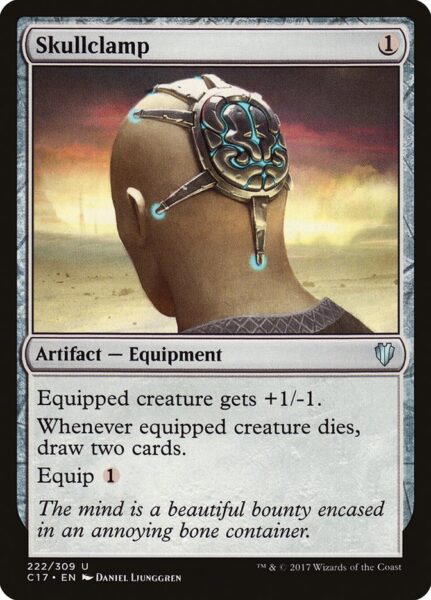
Before I get to my choices, I should address the absence of a card like Skullclamp. As I detail in My Commander Philosophy, I try to eschew playing the kinds of cards that can go in every deck because they’re generically good. Skullclamp would fit nicely in our deck should you not feel the same way. This is also why none of my decks have Sol Ring or Swiftfoot Boots. Ramp (Sol Ring notwithstanding) is one place where I do play a lot of the same cards for lack of better playable options. Still, whenever possible, I try to pick on-theme ramp cards (Noxious Newt) over the usual suspsects. Still, most decks want between six and 10 ways to ramp, and there are rarely that many on-theme options.
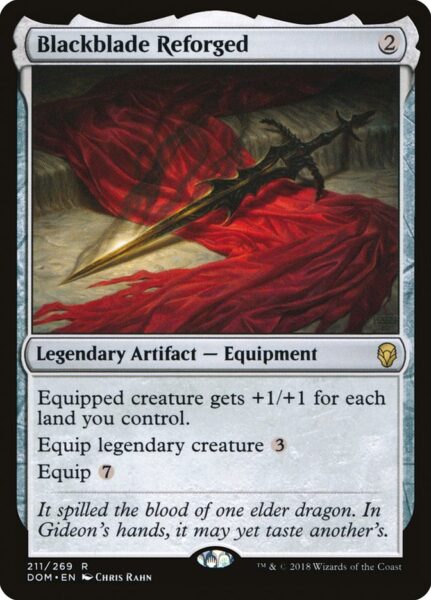
Blackblade Reforged – one of our best ways to make our commander a must-kill threat. We also play 11 other legendary creatures to attach this to, so we’ll rarely every pay to equip this.
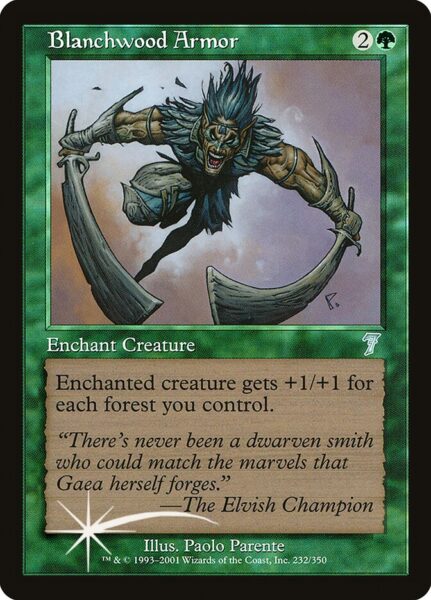
Blanchwood Armor – being on a budget, we’re only playing 14 Forests so it’s possible we should swap this out for something more reliable to grow our commander. Still, with only three Forests, The Serpent Society will kill our opponent in 4 turns.
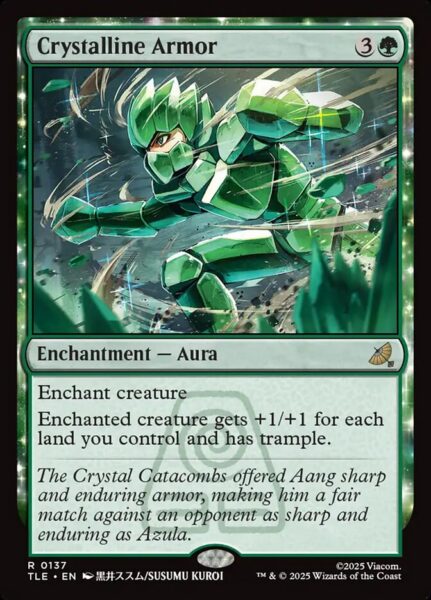
Crystalline Armor – in a lot of ways, this is a strict upgrade to Blackblade Reforged since it grants trample and costs less. It is one of our best ways to force our opponent’s hand with their spot removal.
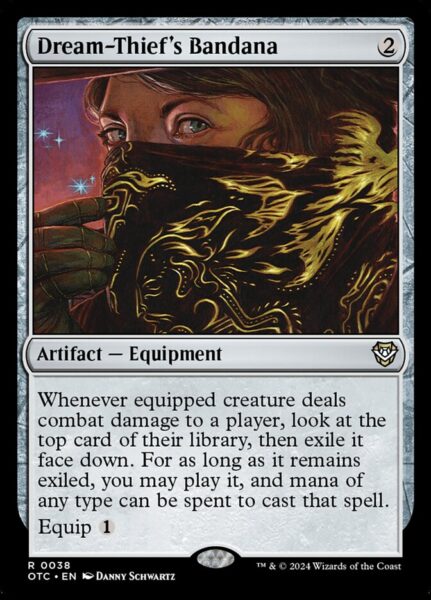
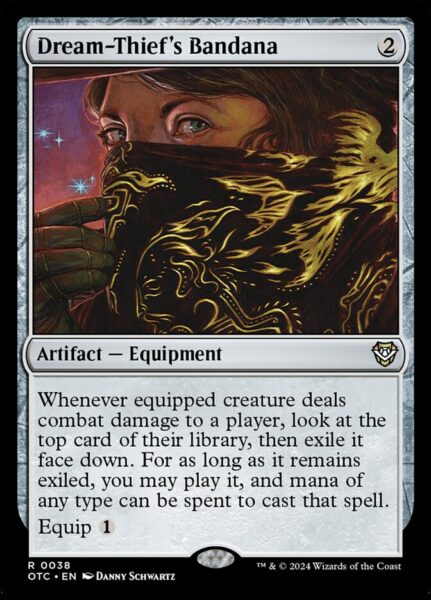
Dream-Thief’s Bandana – I’m so happy to find a home for this card! There’s something about playing your opponent’s cards that is so much fun. My original list included Gonti, Lord of Luxury for this exact purpose, and we’re playing Tinybones, the Pickpocket to snag cards from our opponent’s graveyard. I cut Gonti for more sac outlets, but I couldn’t bring myself to get rid of Tinybones. I just love that card, even though it’s probably worse in Commander than Gonti.
Fireshrieker – in conjunction with Crystalline Armor, this equipment should present lethal or wipe our opponent’s board.
Forebear’s Blade – trample is the keyword we’re most interested in here, but the rest is pretty sweet, too!
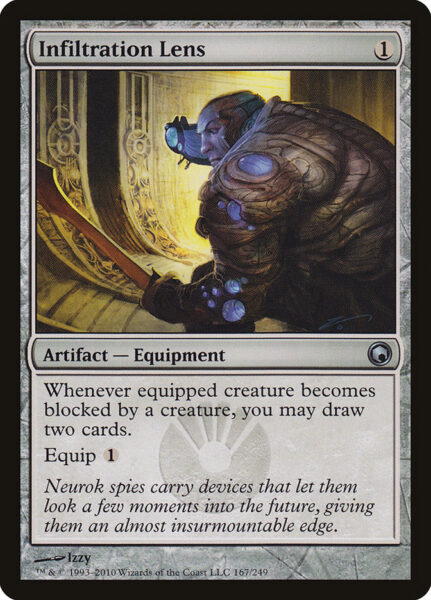
Infiltration Lens – Green has ways to force opponents to block with everything they have, which would result in a ton of cards for us in conjunction with this card. Nemesis Mask is an equipment that has this affect, too. I don’t have a copy of that card, but I’d make room for it if I did. A quick word, though, about forcing our opponents to block. Sure, it’s great if we draw 6+ cards in the above scenario, but killing our commander in combat is one way our opponents can get out of that rock and hard place we want them in. Thus, I’d be wary of suiting up The Serpent Society with any of these kinds of cards and would instead stick them on one of our many other deathtouchers.
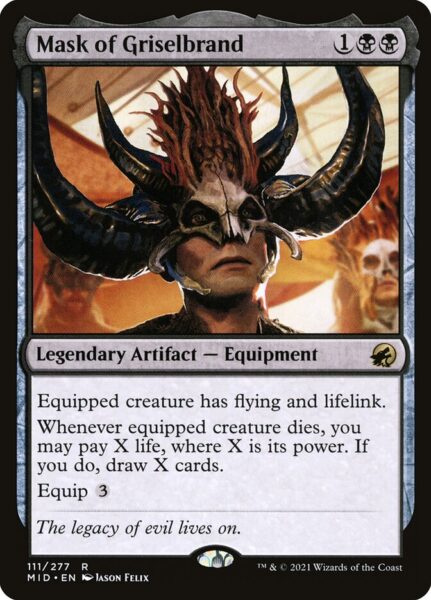
Mask of Griselbrand – another equipment that can draw us cards if we have the mana available, but this won’t happen that often. Instead, we’re mostly interested in the evasion and lifelink, since the former makes it harder to block our commander, while the latter synergizes with some of our other cards.
Snake Umbra – an obvious flavor win, we need no other reason to play this enchantment. Still, there are three good ones to go along with its on-theme name.
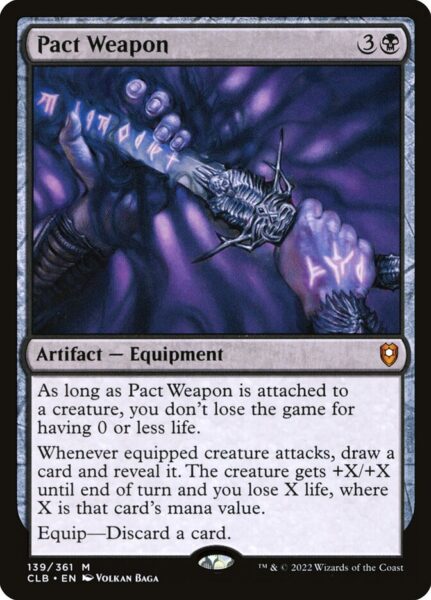
Pact Weapon – I love this card more and more every time I read it! That first block of text will force our opponent to answer our commander before killing us with damage. The second block provides card advantage, while also buffing the creature. This is one reason we want a certain amount of lifegain in our deck, by the way. And the equip cost, while ostensibly a drawback, is really quite good for us. We can play this the turn after resolving our commander, discard a card to immediately equip it to a creature, and then replace that card on attacks.
Sixth Sense – for , this enchantment is worth the inclusion. Put this on a turn 1 Tinybones, and we’ll draw a ton of cards in the right match-ups.
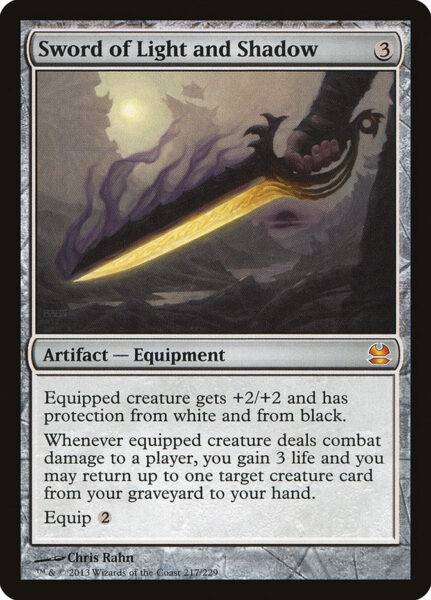
Sword of Light and Shadow – in a nonbudget deck, you could jam all of the swords and be done, but what’s the fun in that? Who would play Pact Weapon when you can play Sword of Fire and Ice? This sword, however, synergizes with our sacrifice plan thanks to the recursion it gives us, while the lifegain fits in with a number of our other cards. It also happens to be one of the more affordable at under $10.
Sword of Vengeance – one of our best equipment to put on any of our big deathtouch creatures thanks to the haste it grants. Otherwise, we’re mostly interested in trample followed by first strike.
Transmogrant’s Crown – is this card better than Skullclamp? Nah, but it buffs better and still draws us a card when the creature dies, which fits with our sacrifice plan.
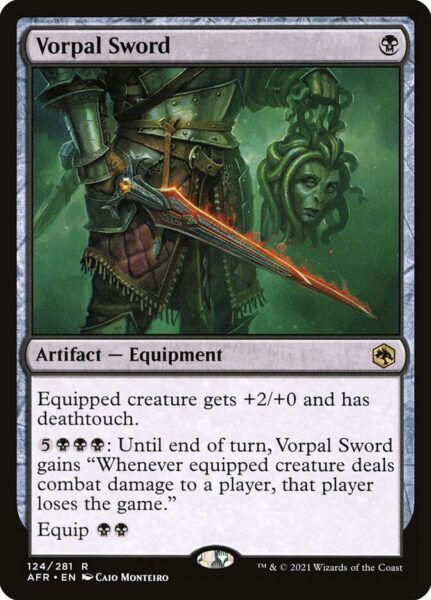
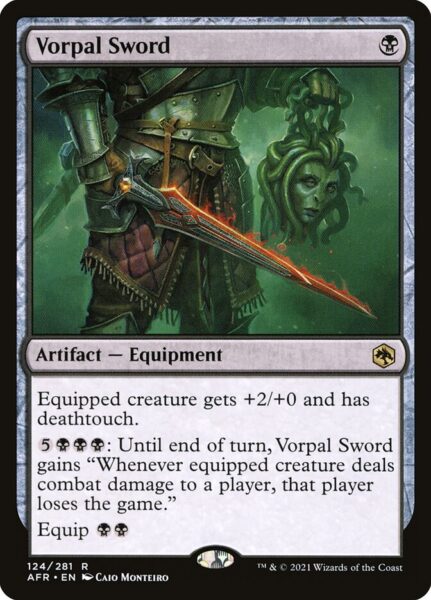
Vorpal Sword – even on a budget, we’ve found a “I-win-the-game card!” Well, technically, it’s our opponent who loses when all conditions are met, but this 1-mana equipment will make our commander a must-kill as soon as we get to .
The Deathtouchers
Given The Serpent Society‘s static ability, we want as many creatures with deathtouch as possible. And since we’re not all in on the Aristocrat avenue, we aren’t filling our deck with cheap 1-drops that serve first and foremost as fodder for sacrifice. Rather, we want deathtouch creatures that give us removal, card draw, recursion, and more!
Ideally, our opponent will use their own kill spells to deal with these powerful creatures, forcing themselves to sacrifice a creature of their own. Otherwise, we’re well situated to bring our creatures back from the graveyard, allowing us to sacrifice our weakest, least impactful deathtoucher based on the boardstate when necessary.
Furthermore, while we want to suit up our commander whenever possible, there will be situations where it makes the most sense to equip one of our other creatures and force unfavorable blocks. That’s the great thing about deathtouch. In most circumstances, we’ll always be trading up.
Archpriest of Shadows – this is one of our five creatures that can bring another creature back from the graveyard. If we can use her backup ability on one of our other creatures, then that gives us six such creatures, even if one is just for a turn!
Body Launderer – this underplayed, inexpensive mythic synergizes in three ways with our strategy. Besides deathtouch, it grows with each sacrificed creature, then brings a non-rogue back from the graveyard when it dies. We happen to have two rogues in our deck, but otherwise, we should get something back pretty reliably.
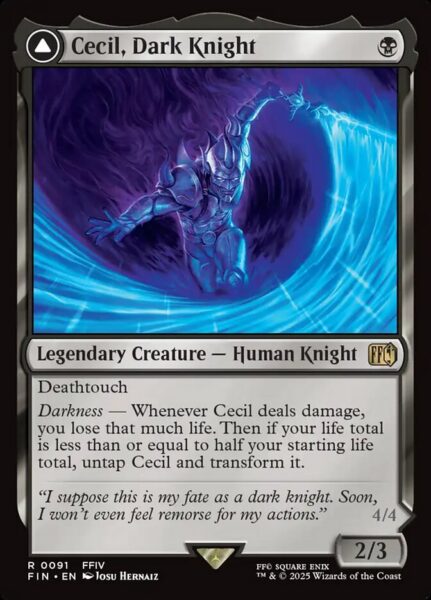
Cecil, Dark Knight – this 1-drop on turn 1 has a really long way to go to flip, but I want to try it out. We want some number of cheap deathtouch creatures to cast early so that we have something on the board when we cast our commander. This Human Knight has a powerful upside and we play a lot of ways to gain our life back, besides via Cecil, Redeemed Paladin. This card is probably at its best early as something to sacrifice or put in front of a threat, then get back later if and when our life total is low enough for us to flip him the same turn he first attacks.
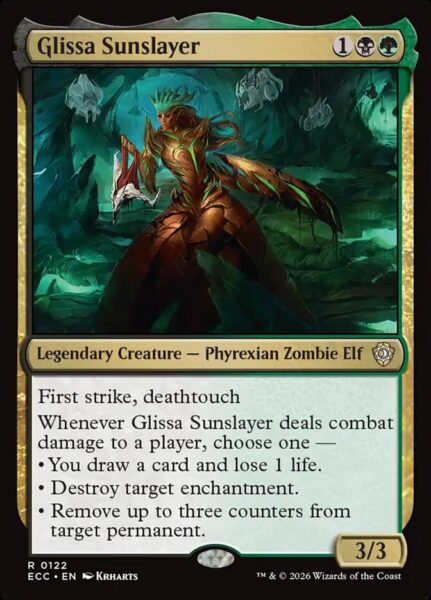
Glissa Sunslayer – this card is the epitome of power creep in Magic. A 3-drop 3/3 with first strike and deathtouch is already better than most 3-drops from pre-2015. Throw in all the rest of that text and this card is amazing. And it’s a rare. Wow.
Grave Titan – found mostly in Zombie Tribal decks, I also play this card in my Giant Tribal deck. However, I’m most excited to have it in this deck, to be honest. Most of our threats won’t single-handedly take over a game the way this one will if left unanswered.
Hissing Quagmire – I usually avoid creature lands in Commander, as I honestly think the risk-reward is too high (entering tapped), but in a deck like this, I think it’s worth including.
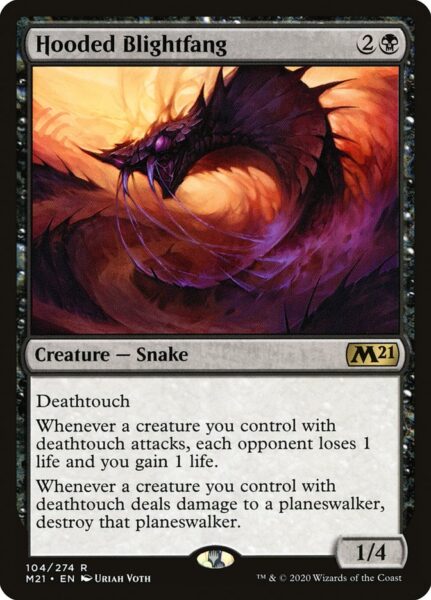
Hooded Blightfang – I love this card so much! It satisfies my love of Aristocrat decks, while also being quite powerful in our deck, given that it will trigger for each deathtouch creature that attacks. The lifegain we get from this Snake (look at that flavor win!!!), will help not just insulating our life, but will trigger Witch of the Moors, as well.
Isareth the Awakener – another 3-drop with great upside. Unfortunately, we will probably lose the creature we get back from the yard the next time it dies, but not if we have Glissa Sunslayer out. With her, we can remove the corpse counter upon dealing combat damage with her.
Plague Engineer – this card’s ceiling is game-winning, while its floor is still pretty good, given our commander.
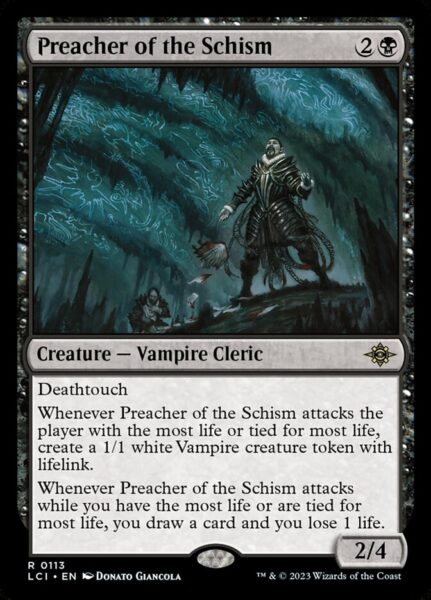
Preacher of the Schism – a late addition, this Vampire Cleric synergizes with our lifegain subtheme, while also providing card advantage in the right spot. It’s another 3-drop rare that just does so much.
Qarsi Revenant – a strictly better Vampire Nighthawk, it says something about the state of Magic that a 3/3 flying, deathtouch, and lifelink creature feels somehow meh. Suit it up, however, and this Vampire can catch us back up quickly. Its renew mechanic means we can give our commander evasion once we’ve sacrificed Qarsi Revenant to get rid of one of our opponent’s creatures. Now that’s value!
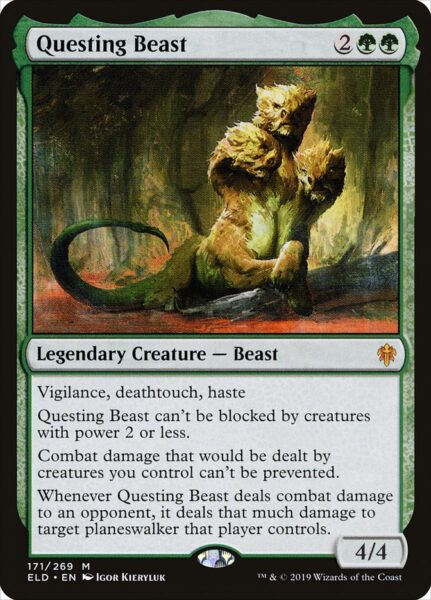
Questing Beast – my favorite non-Dragon card, I feel no shame for playing this mythic over some other deathtouch mythic I don’t play elsewhere. It fits our strategy, can nerf combat prevention cards like The One Ring or Constant Mists, and gets around chump blockers. I’ve written a lot about this card over the years. It says something about how busted Throne of Eldraine was as a set that this card is considered fine in comparison to what got banned.
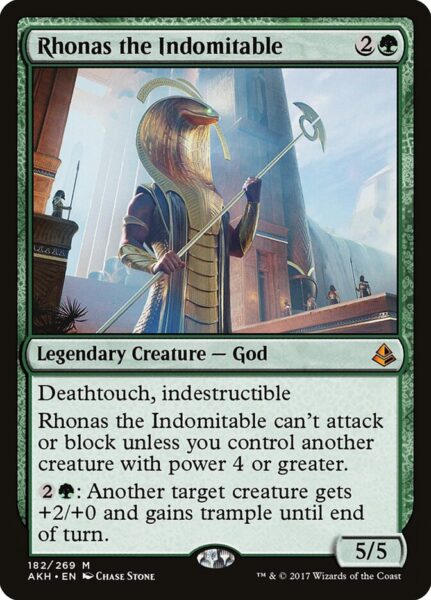
Rhonas the Indomitable – at nearly $6, this is one of our splurge cards, but what would a Snake deck look like without the Snake God himself? Everything about this card is great for us, but if I had to pick just one thing, it would be trample.
Sidisi, Undead Vizier – our most expensive card, I really tried to convince myself to cut it in order to keep some of my other first picks. This Zombie Naga, however, just synergizes so well with our deck, giving us a sac value with perhaps the game’s best upside: Demonic Tutor!
Terror of Towashi – this card screams sealed all-star and bulk rare everywhere else. Still, it does a lot for us, so I’m happy to have it in the 99. We could swap this out in favor of Whip of Erebos, but then we lose our deathtouch synergy and the ability to return the same creature again and again. Oh, and Whip costs nearly $8.
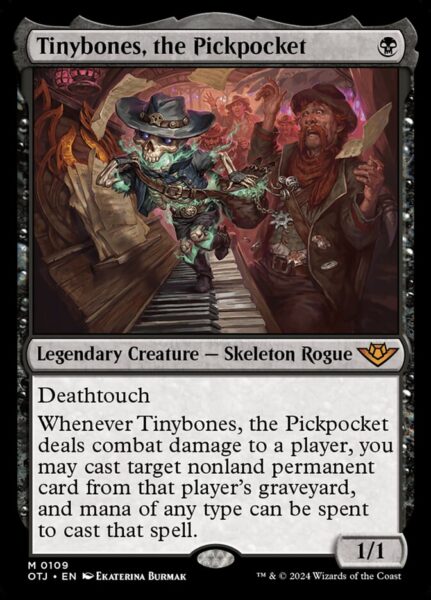
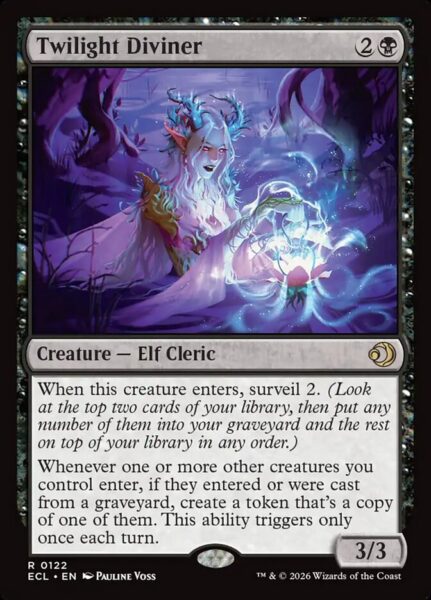
Tinybones, the Pickpocket – our other 1-drop and one of two Rogues we play, I was super high on this card when it was first spoiled. Alas, no one else seemed to agree, but I still love it. In this deck, if all we ever do is sacrifice it for value, we’ll be happy.
Unstoppable Slasher – a nearly must-answer threat if resolved on turn 3, we’re happy to sacrifice this Zombie Assassin ourselves for value, since it’ll bring itself back. With Glissa Sunslayer out, we even have the ability to remove the stun counters. Huzzah!
Varragoth, Bloodsky Sire – I was stunned to see how expensive this card was (over $3), but I guess any card that lets you tutor repeatedly will hold more value than most other bulk rares. As a Demon, it also has some tribal demand.
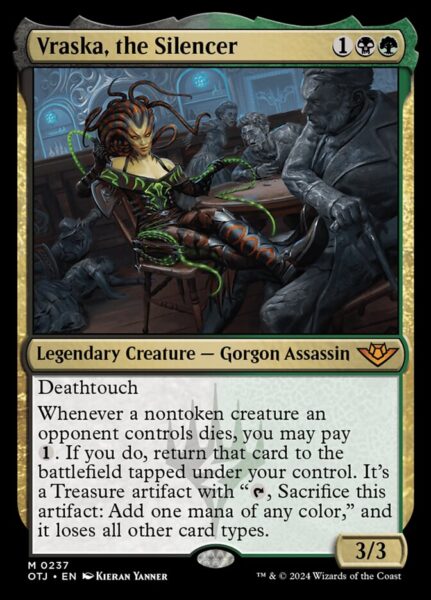
Vraska, the Silencer – I imagine every Commander player overlooks some aspect of the game. Maybe you tend to play fewer mana rocks than most; or fewer lands; or fewer targeted removal spells. For me, it’s graveyard hate. I usually let a handful of utility lands do the heavy lifting against my opponent’s graveyard. However, with the way the game is now, nearly every deck will have some way to use its graveyard as an extension of its hand, which means we should have some way to stop that. Note that with Vraska here, the creature we return as a Treasure will retain its static and activated abilities. That’s pretty not bad!
Witch of the Moors – I remember when this card was over $20 and now… .40 cents. This Human Warlock is our best payoff for all of our lifegain, while also being one of our best recursion cards, even if the creature comes back to our hand.
Honorary Mention
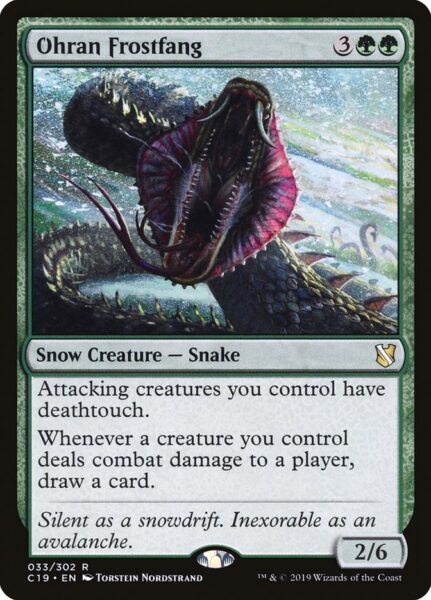
Ohran Frostfang – grants our attacking creatures deathtouch, which we can then sac with our instant speed cards to trigger our commander. This won’t be relevant often for us, except with some of the random tokens we make.
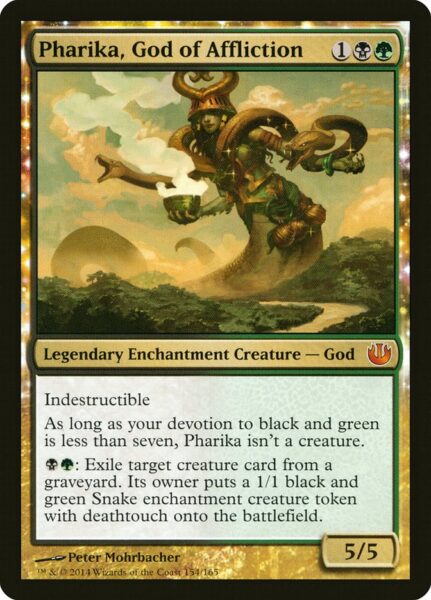
Pharika, God of Affliction – even if we’re not a Snake Tribal deck, it feels right including cards like this one for flavor purposes alone. However, Pharika does a lot more than make our deck more on-theme. She gives us some more graveyard hate, while also generating token creatures with deathtouch that we can sacrifice with our commander out.
Sac Outlets
We play nine ways to sacrifice one of our creatures, with only three being repeatable. For this reason, we want to save our sacrificing to get our opponent’s best creatures whenever possible or to keep their board empty. However, since all of the ways we have to sacrifice a creature comes with its own upside, we won’t want to sit back and wait for our opponent to resolve a creature before advancing our own game plan via card draw, for instance.
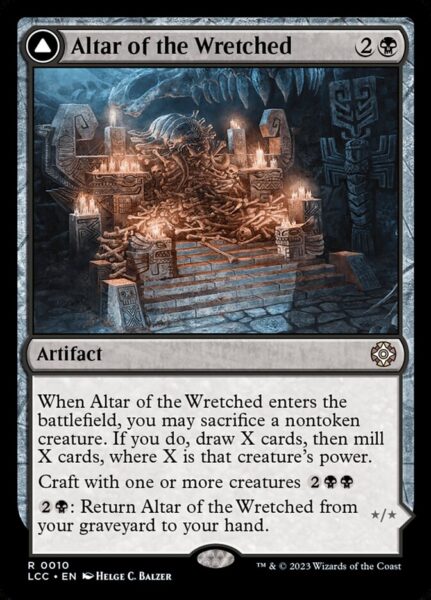
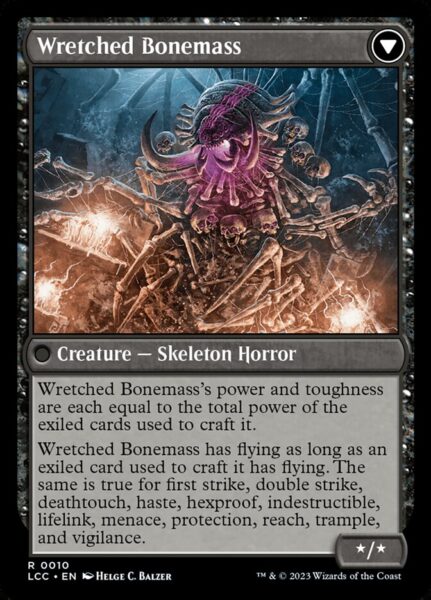
Altar of the Wretched – I love this card and I love the craft mechanic, though I’ve rarely played it. I think it’s a very creative way of giving cards you’re already playing extra value. For 3 mana, we get to sac a creature, ideally making our opponent sac one, as well, draw a bunch of cards, and fill our graveyard with creatures we can use to craft and make Wretched Bonemass. And just because, I guess, we can do it all again for should our opponent answer either side.
Costly Plunder – even though this spell is 2 mana, I like the flexibility it gives us to sacrifice an artifact and not just a creature. For instance, we can sacrifice Altar of the Wretched to draw two cards, pay the mana to return the Altar to our hand, recast it, sac a creature, and do all the things again. Beautiful!
Cut of the Profits – we won’t always want to pay the casualty cost, but it’s great that we have the option.
Disciple of Bolas – in a lot of ways, this Human Wizard from M13 is the best at what he does. Card draw and lifegain for a sacrificed creature that are both attached to that creature’s power for 4 mana and on a body is the bar for this kind of effect.
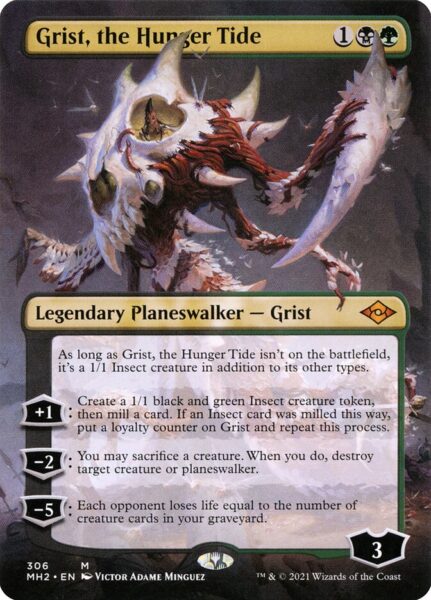
Grist, the Hunger Tide – untapping with this Planeswalker out alongside our commander will often lead to us locking our opponent out of casting creatures for at least a few turns. And if you’ve never played with or against Grist, please remember that it counts as a creature everywhere else, which means we can return it from the graveyard with Witch of the Moors, for example.
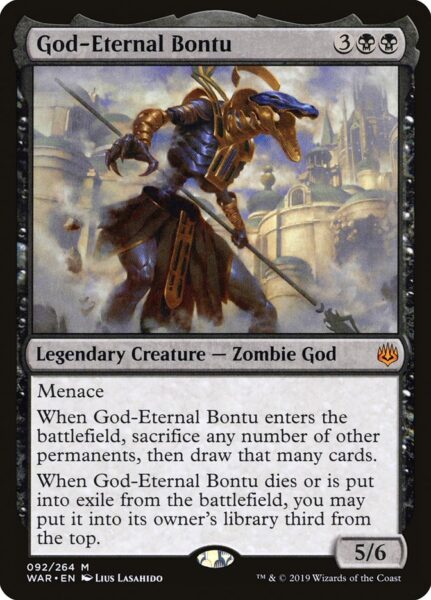
God-Eternal Bontu – more card draw attached to a sac outlet. On the right board, we can resolve this, sac enough of our deathtouchers to wipe our opponent’s board, refill our hand, then turn the corner and close out the game.
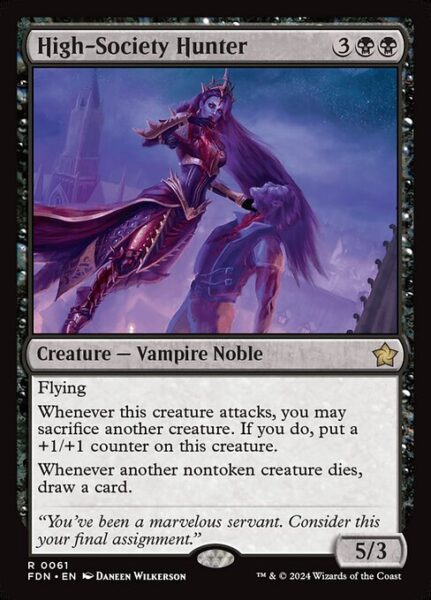
High-Society Hunter – another over-powered card that would have been a mythic 10 years ago. Other than what should now be obvious synergies with our strategy, the 5/3 evasive body that can grow gives us a much needed additional bomb to close out games.
Vampiric Rites – our best sac outlet, we get lifegain and card draw for the low cost of a creature and .
Village Rites – the going rate for this effect in today’s Magic. It wasn’t always so cheap and at instant speed.
Card Draw
We play a ton of ways to draw cards, 18 in fact. I’ve mentioned most already, so I’ll just list them here.
Altar of the Wretched
Costly Plunder
Cut of the Profits
Disciple of Bolas
Glissa Sunslayer
God-Eternal Bontu
High-Society Hunter
Infiltration Lens
Mask of Griselbrand
Ohran Frostfang
Pact Weapon
Pillage the Bog
Preacher of the Schism
Sixth Sense
Snake Umbra
Transmogrant’s Crown
Vampiric Rites
Village Rites
Graveyard Recursion
We play seven cards that allow us to get creatures (mostly) back from our graveyard. Again, I’ve mentioned most already, so I’ll only talk about the one I haven’t.
Archpriest of Shadows
Body Launderer
Isareth the Awakener
Sword of Light and Shadow
Terror of Towashi
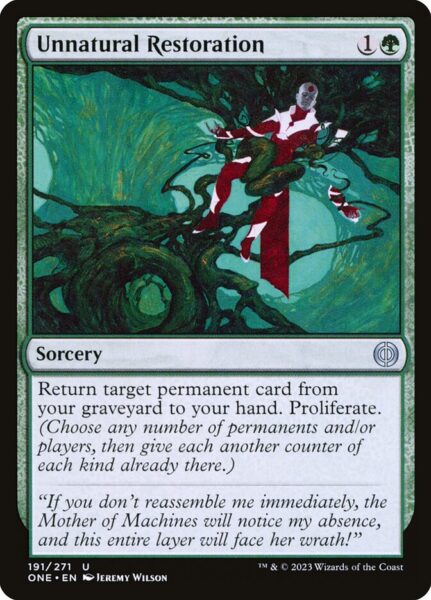
Unnatural Restoration – our only way of getting any permanent from the graveyard and only one of two ways we have to proliferate.
Witch of the Moors
Lifegain
We have eight ways to gain life to help offset the life loss from our other cards.
Cecil, Redeemed Paladin
Disciple of Bolas
Hooded Blightfang
Mask of Griselbrand
Preacher of the Schism
Qarsi Revenant
Sword of Light and Shadow
Vampiric Rites
The Rest
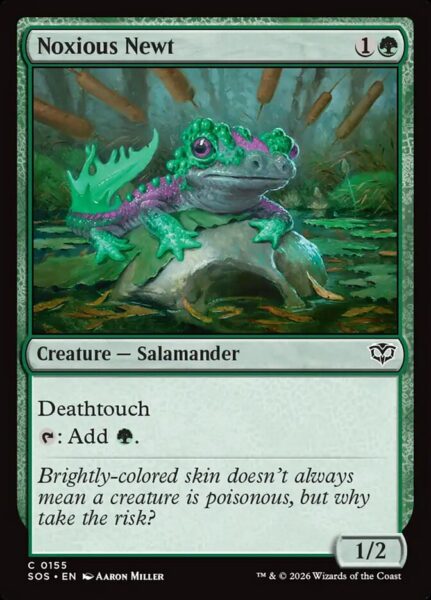
The remainder of the deck is ramp and removal. Nothing too special here, though Noxious Newt deserves a shoutout for being on theme ramp! Golgari Charm makes an appearance mostly as an inexpensive protection spell with flexibility. Otherwise, we could make room for other Green protection spells like Ranger’s Guile and cast them after our opponent has paid the ward cost to kill our commander. I’ve left those out for now, but keep it on your radar, particularly cards that will allow The Serpent Society to live through sweepers.
The Lands
Being on a budget, we’re limited in our choices. Karn’s Bastion gives us a way to win via poison counters, even though we aren’t really interested in doing it like this. It will also keep our opponents honest once they realize we do, in fact, have a means to proliferate repeatedly.
We play both Access Tunnel and Rogue’s Passage as a way to get in damage, either in order to draw a card or simply to win with our suited-up commander.
Flex Spots
There is a ton of room for innovation among the equipment and enchantments we could use, particularly if you have no budget constraints. Is Bear Umbra better than Crystalline Armor? Would Sword of Fire and Ice be a natural upgrade to Dream-Thief’s Bandana? Would something like Snakeskin Veil be more impactful than Cecil, Dark Knight?
These are legitimate questions that you’ll have to decide for yourself. Swapping in like-for-like cards is one easy way to change/improve the deck. Otherwise, we are pretty heavy on 3-drops. It may be worth exploring the 2-drop and 4-drop slots more to diversify on this front.
Ideal Hand and Game Play
Per usual, we’d like at least three lands with both colors in our opening hand. We’d also love at least one equipment, as well as either a kill spell or draw spell. Ramp and another deathtouch creature would make for a nice 7.
Unless something crazy has happened by our turn 3, we always want to cast our commander. If we’re worried about counter magic, we can wait. Otherwise, the sooner we resolve The Serpent Society, the sooner we can execute our game plan. From there, we want to suit it up as fast as possible and attack.
There are, however, situations we have to beware of. First, we don’t want to overextend into a sweeper, since that will be what our opponent will be playing towards. Second, we obviously will have to be careful attacking into blockers that can kill our commander. Clearing the way for it is essential to forcing our opponent’s hand on a targeted removal spell.
Third, there will be times when we’ll have to decide between recasting our commander or equipping one of our other creatures. Life totals, opponent’s blockers, and their open mana should guide you in your decision.
Finally, should your opponent deal with The Serpent Society, the best thing to do almost every time is to recast it as soon as possible. The amount of pressure this puts on opponents should not be underestimated.
Weaknesses
Many of our creatures do not belong in the traditional bomb category. They will not win games quickly or on their own. However, with deathtouch, they will more often than not trade up with our opponent’s bombs. Still, without our equipment or enchantments, we will rarely present a fast clock. This will give our opponent lots of time to execute their own game plan or find a sweeper.
Combo decks and other decks that don’t care about what we’re doing will have plenty of time to set up and do their thing if we stumble a little on mana or finding a good piece of equipment.
Sweepers can hurt us in the right spot, but, honestly, we have so many cards that don’t die to traditional sweepers, so much card draw, and enough ways to recur things from the graveyard that it is not that hard to rebuild after a boardwipe not named Farewell.
Go-wide strategies that rely heavily on tokens can cause us problems, as well. Our commander’s static ability only forces opponents to sac nontoken creatures. Decks that can flood the board and get damage through our lethal blockers will often be too fast. The deck doesn’t play any hard sweepers, but you could easily find room for Damnation or Mutilate for this match-up. Otherwise, we do have Plague Engineer and Golgari Charm to take out 1/1s.
Conclusion
The Serpent Society is a one-of-a-kind creature with its ward being five poison counters. As a commander, it lends itself to Infect, which is all the more reason to pivot to a different strategy. Poison is just a red herring…to paraphrase my favorite movie (Clue). While our opponents live in fear of that dreadful number 10, we’ll be killing them with Commander damage or through regular combat, all while drawing a ton of cards and making them sacrifice their board.
So far, playing this deck has been a ton of fun. Despite leaning on the Voltron strategy, it does not play the same each game. Furthermore, we’re just as likely to win via other means than a suited-up big creature.
If you’re looking for an Aristocrat-style deck that leans on equipment and enchantments you don’t play elsewhere, or you simply want to watch your opponent squirm as they calculate the risk ofSwords to Plowsharing The Serpent Society, then give this deck a shot! It’s a blast to play!
Thanks for reading and watching.